
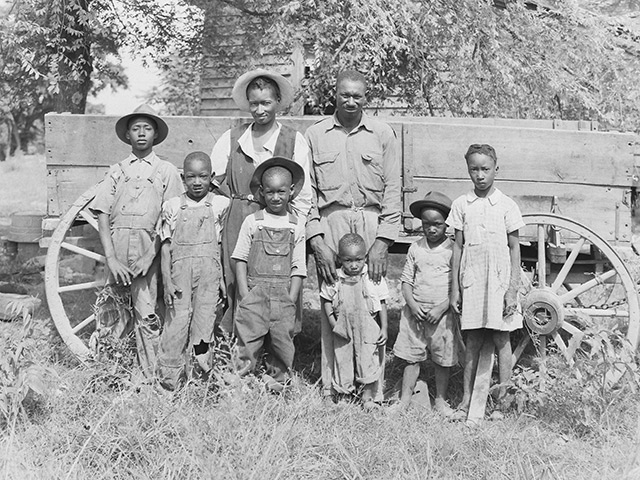
Home page photo (above) – courtesy of the Greenville Historical Society.
Emancipation Day Celebration, June 19, 1900 – The Portal to Texas History.
Juneteenth is America’s second Independence Day — a celebration of liberation, resilience, and the ongoing pursuit of equality. It marks June 19, 1865, the day when Union troops arrived in Galveston, Texas, and announced that more than 250,000 enslaved Black Americans were finally free, more than two years after the Emancipation Proclamation. Wikipedia National Museum of African American History and Culture
Friday, June 19, 2026
Juneteenth — short for June Nineteenth — commemorates the end of slavery in the United States. Although President Abraham Lincoln issued the Emancipation Proclamation on January 1, 1863, it could not be enforced in areas still under Confederate control. Texas, the westernmost Confederate state, became the final stronghold where slavery continued despite the law. National Museum of African American History and Culture
Freedom arrived only when Major General Gordon Granger and roughly 2,000 Union soldiers landed in Galveston Bay on June 19, 1865, issuing General Order No. 3, which declared that enslaved people were free and would henceforth enjoy equal personal and property rights. Britannica
That moment — long delayed, deeply emotional — became known as Juneteenth.
On December 31, 1862, Black Americans gathered in churches and homes for what became known as Freedom’s Eve, waiting for the Emancipation Proclamation to take effect at midnight. When the clock struck twelve, enslaved people in Confederate states were legally free — but not yet physically free. National Museum of African American History and Culture
Texas’ geographic isolation and minimal Union troop presence allowed slavery to continue long after it was outlawed. Plantation owners migrated there to avoid Union lines, bringing enslaved people with them. Freedom did not reach Texas until Union forces arrived in person to enforce the law. National Museum of African American History and Culture
When General Granger read General Order No. 3, celebrations erupted among newly freed Black Texans. The day became an annual tradition beginning in 1866, first centered around church gatherings, prayer, and community meals. Wikipedia
This iconic photograph shows Black elders in Austin celebrating Juneteenth in 1900 — one of the earliest known images of the holiday. It reflects dignity, pride, and the determination to honor freedom publicly. texashistory.unt.edu
Music has always been central to Juneteenth. Brass bands, parades, and dancing were common features of early celebrations. historynet.com
Images like this one show the first generations of Black families living in freedom — rebuilding their lives, communities, and futures. nbcnews.com
Houston’s Emancipation Park, purchased by formerly enslaved men in 1872, became one of the most important Juneteenth celebration sites in the country. britannica.com
Juneteenth is more than a historical anniversary — it is a living tradition that honors:
It acknowledges the painful truth that freedom was delayed for hundreds of thousands of people, even after it was promised.
Juneteenth celebrates the strength, creativity, and endurance of Black Americans who built communities, institutions, and culture in the face of oppression.
The day encourages Americans to confront the legacy of slavery, Reconstruction, segregation, and ongoing racial inequities.
Modern celebrations include parades, music, food festivals, storytelling, and educational events — echoing traditions that began more than 150 years ago. Britannica
In 2021, Juneteenth became a federal holiday, thanks in large part to the lifelong activism of Opal Lee, known as the “Grandmother of Juneteenth.” Britannica
Juneteenth is a reminder that freedom is not just declared — it must be delivered, protected, and lived. It invites all Americans to reflect on the past while celebrating progress and committing to a more just future.
It is a day of remembrance, but also a day of joy — a celebration of a people who survived, resisted, and ultimately triumphed.
We face similar challenges today. We must not let our freedoms and Democracy be taken away.

If you vote for Trump and his MAGA GOP members you may indirectly start World War III.
If Trump and his MAGA GOP take control of our Congress, they will cut off support for Ukraine. They already cut support on the advice of Trump when the Congress was ready to approve the spending bill with support for Ukraine.
What will happen next?
said Larry Jacobs, director of the Center for the Study of Politics and Governance at the University of Minnesota. “This is supposed to be the party of conservative principles, of tradition, of respect for customs and rules that make society governable.
“The idea that the law does not apply to Republicans is something that has now become part of the mainstream of the Republican party. We see it in terms of the approach to elections. We see it in terms of the treatment of immigrants. Some of the actions with regard to abortion may approach that level. The Republican party appears to consider the law and the constitution to be optional and to have lost legitimacy.”
From The Guardian
Republicans’ lawless leaders at odds with midterm law and order message | Republicans | The Guardian
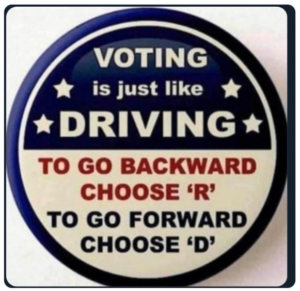
If you vote Republican you are supporting:
– 19 GOP red states have pending laws suppressing voter’s ability to vote. Historically, dictators and Fascists have suppressed votes to stay in power.
– The GOP has come out in support of QAnon, The Oath Keepers and the Proud Boys
– You may lose a loved one, a relative or a friend in a train crash, a bridge collapse or a plane crash as Republicans strip funds from President Biden’s infrastructure bill.
– The Texas abortion ban if left to stand will be passed in several other GOP states. Idaho will pass an anti-abortion law based on the Texas law. 16 states have “trigger” abortion ban laws.
by the US Supreme Court.
https://cnn.it/3RaW1zm
https://nyti.ms/3IcANNo
With the recent Supreme Court banning EPA authority from polluters
https://bit.ly/3IfQ1Bf
on Gun Purchases – will never get passed.
Watch Jimmy Kimmel’s emotional plea to improve gun purchase background checks
https://cnn.it/3AnRweO
– will never go up leaving 18 states still paying $7.25 an hour.
– the last thing America needs are conservative leaders, especially some Republicans who want to keep America from progressing. The last thing America needs is backward-thinking leaders in the 21st Century.
– Republicans have turned to cheating to stay in power or to get back into power…and nothing is getting done by them for the American people.
The enforcement or advocacy of strict obedience to authority at the expense of personal freedom.
and everything America stands for: Truth, Justice and Liberty for all? Look what is happening in Ukraine.
*Of course, not all Republicans are like those described above. Here is a list of those who should stay in office.
House of Representatives – those who voted to impeach the former president
Senate – The Republicans who voted to convict the former president after impeachment:
YOUR VOTE COUNTS. It’s a lie to think otherwise.
Paid for by Jake Stone for American Democracy
VOTE like your freedom depended on it…because it does.

 Books of the NY Times