
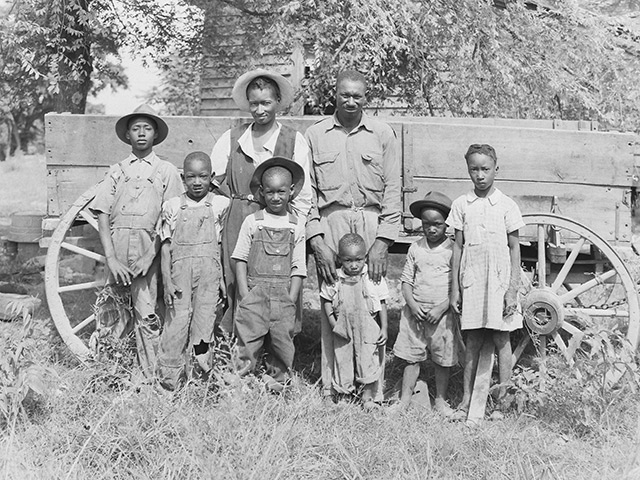
Home page photo (above) – courtesy of the Greenville Historical Society.
Emancipation Day Celebration, June 19, 1900 – The Portal to Texas History.
Juneteenth is America’s second Independence Day — a celebration of liberation, resilience, and the ongoing pursuit of equality. It marks June 19, 1865, the day when Union troops arrived in Galveston, Texas, and announced that more than 250,000 enslaved Black Americans were finally free, more than two years after the Emancipation Proclamation. Wikipedia National Museum of African American History and Culture
Friday, June 19, 2026
Juneteenth — short for June Nineteenth — commemorates the end of slavery in the United States. Although President Abraham Lincoln issued the Emancipation Proclamation on January 1, 1863, it could not be enforced in areas still under Confederate control. Texas, the westernmost Confederate state, became the final stronghold where slavery continued despite the law. National Museum of African American History and Culture
Freedom arrived only when Major General Gordon Granger and roughly 2,000 Union soldiers landed in Galveston Bay on June 19, 1865, issuing General Order No. 3, which declared that enslaved people were free and would henceforth enjoy equal personal and property rights. Britannica
That moment — long delayed, deeply emotional — became known as Juneteenth.
On December 31, 1862, Black Americans gathered in churches and homes for what became known as Freedom’s Eve, waiting for the Emancipation Proclamation to take effect at midnight. When the clock struck twelve, enslaved people in Confederate states were legally free — but not yet physically free. National Museum of African American History and Culture
Texas’ geographic isolation and minimal Union troop presence allowed slavery to continue long after it was outlawed. Plantation owners migrated there to avoid Union lines, bringing enslaved people with them. Freedom did not reach Texas until Union forces arrived in person to enforce the law. National Museum of African American History and Culture
When General Granger read General Order No. 3, celebrations erupted among newly freed Black Texans. The day became an annual tradition beginning in 1866, first centered around church gatherings, prayer, and community meals. Wikipedia
This iconic photograph shows Black elders in Austin celebrating Juneteenth in 1900 — one of the earliest known images of the holiday. It reflects dignity, pride, and the determination to honor freedom publicly. texashistory.unt.edu
Music has always been central to Juneteenth. Brass bands, parades, and dancing were common features of early celebrations. historynet.com
Images like this one show the first generations of Black families living in freedom — rebuilding their lives, communities, and futures. nbcnews.com
Houston’s Emancipation Park, purchased by formerly enslaved men in 1872, became one of the most important Juneteenth celebration sites in the country. britannica.com
Juneteenth is more than a historical anniversary — it is a living tradition that honors:
It acknowledges the painful truth that freedom was delayed for hundreds of thousands of people, even after it was promised.
Juneteenth celebrates the strength, creativity, and endurance of Black Americans who built communities, institutions, and culture in the face of oppression.
The day encourages Americans to confront the legacy of slavery, Reconstruction, segregation, and ongoing racial inequities.
Modern celebrations include parades, music, food festivals, storytelling, and educational events — echoing traditions that began more than 150 years ago. Britannica
In 2021, Juneteenth became a federal holiday, thanks in large part to the lifelong activism of Opal Lee, known as the “Grandmother of Juneteenth.” Britannica
Juneteenth is a reminder that freedom is not just declared — it must be delivered, protected, and lived. It invites all Americans to reflect on the past while celebrating progress and committing to a more just future.
It is a day of remembrance, but also a day of joy — a celebration of a people who survived, resisted, and ultimately triumphed.
We face similar challenges today. We must not let our freedoms and Democracy be taken away.
The lawsuit against Kari Lake and Michael Rigas centers on allegations that they violated federal law and the First Amendment by turning Voice of America (VOA) into a vehicle for political messaging—raising profound legal and press‑freedom concerns. AOL Yahoo News Singapore
The lawsuit frames the alleged actions of Kari Lake and Michael Rigas as an unprecedented breach of legal safeguards designed to keep U.S. government‑funded journalism independent. If the claims are upheld, the case could set significant precedent on the limits of political influence over publicly funded media—and reaffirm the constitutional and statutory protections that anchor press freedom in the United States.
If you want, I can also break down the lawsuit’s potential outcomes, its historical parallels, or how it fits into broader debates about government‑funded media.
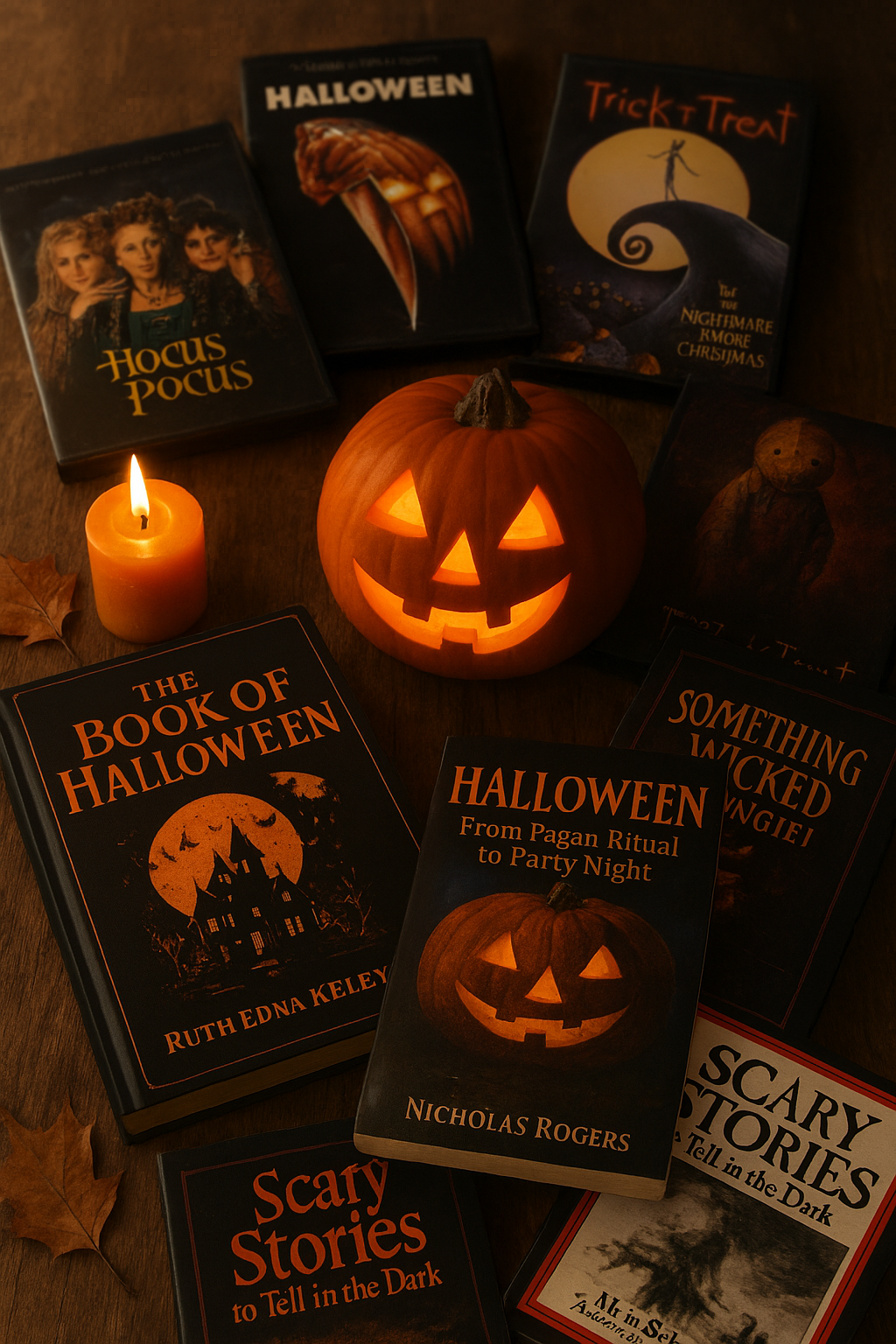
Halloween is more than costumes and candy—it’s a centuries-old celebration rooted in ancient rituals, spiritual beliefs, and cultural evolution. This blog post explores its origins and highlights books and movies that capture its eerie magic.
Halloween, celebrated every October 31st, traces its roots to the ancient Celtic festival of Samhain. Over 2,000 years ago, the Celts marked the end of summer and the beginning of the dark winter with Samhain, believing that on this night, the boundary between the living and the dead blurred. Spirits were thought to roam the earth, and people lit bonfires and wore costumes to ward them off Rosetta Stone History.
In the 8th century, Pope Gregory III designated November 1st as All Saints’ Day, incorporating some Samhain traditions. The night before became All Hallows’ Eve, eventually shortened to Halloween. Over time, the holiday evolved into a community-centered celebration with trick-or-treating, jack-o’-lanterns, and spooky storytelling History.
Whether you’re curious about Halloween’s history or craving a chilling read, these books offer both insight and spine-tingling entertainment:
Halloween wouldn’t be complete without a few cinematic scares. These films have become staples of the season:
Halloween is more than just a night of costumes and candy—it’s a celebration of mystery, imagination, and the thin veil between worlds. It invites us to confront our fears, honor the past, and revel in the macabre. Whether you’re reading about its origins, watching a horror flick, or diving into a spooky novel, Halloween offers a unique lens into our cultural fascination with the unknown.
So light a candle, carve a pumpkin, and let the spirits of Halloween guide your night.
Sources: Rosetta Stone History istruestory.com
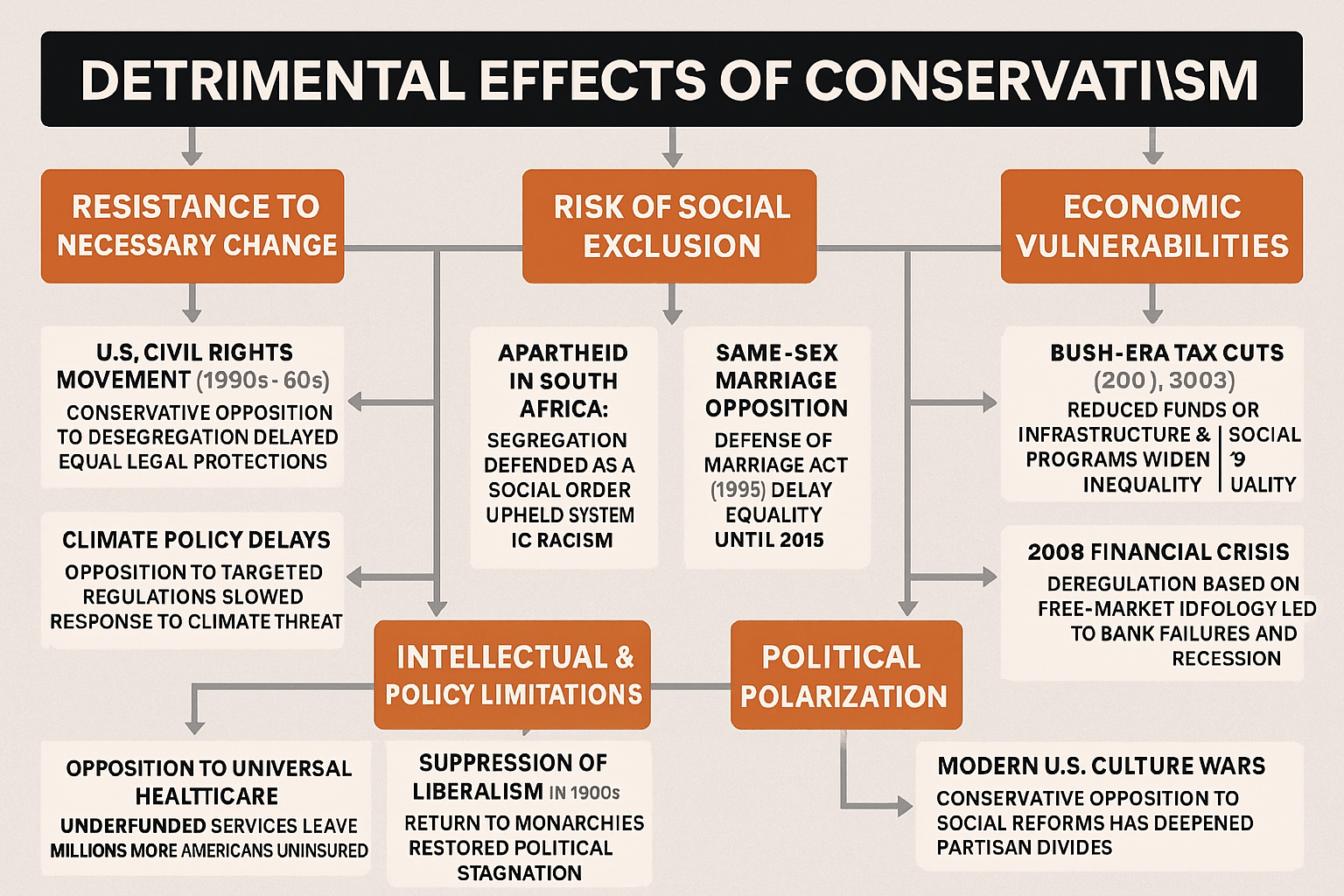
Conservatism, like any political ideology, has both advocates and critics. When critics talk about its detrimental effects, they often point to patterns that can emerge when its principles are applied rigidly or without adaptation to changing circumstances. Here are some of the most commonly cited drawbacks:
Let’s ground those potential downsides of conservatism in concrete historical and contemporary examples. These illustrate how the principles, when applied rigidly, have sometimes produced the kinds of effects we discussed earlier.
Sources
Three Problems with Conservatism | Libertarianism.org
Pros and Cons of Conservatism – Pros an Cons
The Impact of Conservatism
Our forefathers of the Constitution never thought the American people would vote for a criminal with such nefarious qualities and no soul. They never imagined that American voters could be so morally and ethically bankrupt and didn’t adopt any provisions in our Constitution to address such an unthinkable scenario. But here we are in 2025 almost 250 years later.
Maybe, the voters who put him there deserve what will happen to them in the next four years or what will not happen. They believed the con he was putting forth even though he proved beyond a doubt in the last eight years that he is a pathological liar, sexual predator, and a racist. And as philosopher George Santayana, who is credited with saying “Those who cannot remember the past are condemned to repeat it” is now true and happening today.
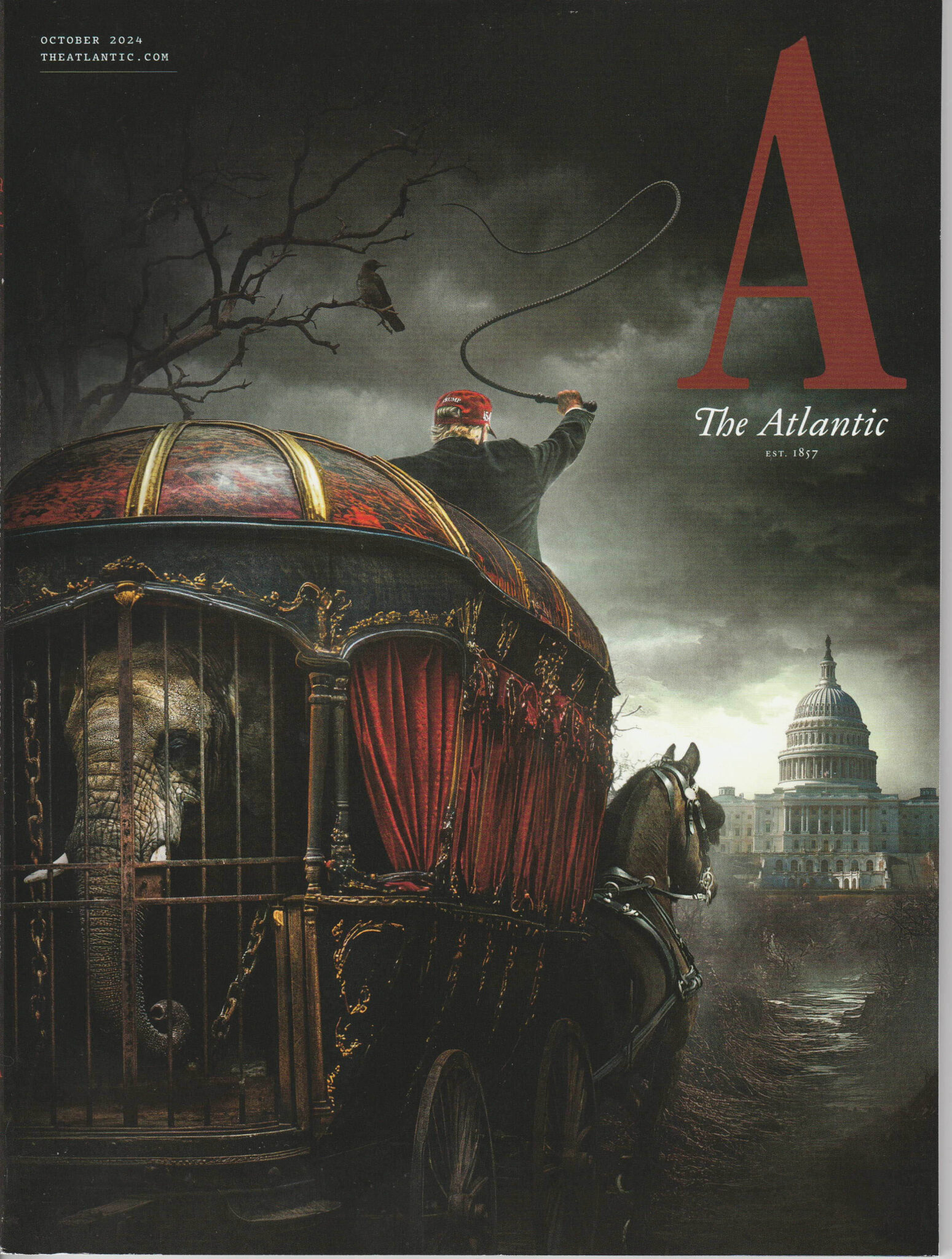
The featured photo above with elephant in the cage is from the October 2024 cover of The Atlantic magazine and depicts the current Republican party – soul-less, cowardly, and all fearing of the person driving the circus wagon soon to reach the White House. If one opened the cage and forced the elephant out, gave him a conscience and freedom to act on his own, he would turn and stomp, and struggle desperately to get back into the cage. They are truly Trump’s slaves programmed to obey his every whim.
The Trump cancer appeals to the MAGA Republicans and his allies because it addresses a basic, depraved instinct – selfishness. The Republican party is the party of selfishness because they believe they will get what they want supporting Trump – to stay in power, obtain more power, get richer, and do what they want with no accountability. To hell with the voters who put them in office or how much suffering it will instill on the American people and the damage it will do to America and the world.
It’s ironic that Monday is also Martin Luther King, Jr. Day, a federal holiday. Dr. King unselfishly lived and died for Civil rights in this country for all Americans. His dream may be shattered in the next four years.
It is a sad day for America.
___________________________
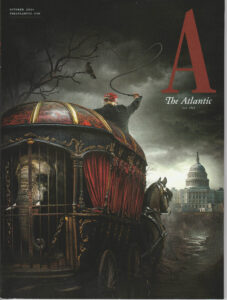 The October 2024 cover of The Atlantic magazine was created by Justin Merz based on the visual language of old Ray Bradbury and Stephen King paperbacks to portray a circus wagon on its nefarious approach to the Capital.

Read the story about people booking Airbnb homes and rooms in Kiev, but don’t plan to go there. The funds go to Ukrainian Airbnb hosts and are used for the bombed-out residents for food, medicine and other essentials.
See the video on bombed residential areas in Ukraine that have no military significance.
CNN, March 6, 2022
WHEREVER THE TIDE OF LIFE TAKES YOU AND YOUR LOVED ONES
The Origin of New Year’s Day
From the History Channel
The first New Year’s Day was celebrated on January 1 in the year 45 B.C. for the first time in history as the Julian calendar took effect.
Soon after becoming Roman dictator, Julius Caesar decided that the traditional Roman calendar was in dire need of reform.
Introduced around the seventh century B.C., the Roman calendar attempted to follow the lunar cycle but frequently fell out of phase with the seasons and had to be corrected. In addition, the pontifices, the Roman body charged with overseeing the calendar, often abused its authority by adding days to extend political terms or interfere with elections.
In designing his new calendar, Caesar enlisted the aid of Sosigenes, an Alexandrian astronomer, who advised him to do away with the lunar cycle entirely and follow the solar year, as did the Egyptians.
The year was calculated to be 365 and 1/4 days, and Caesar added 67 days to 45 B.C., making 46 B.C. begin on January 1, rather than in March. He also decreed that every four years a day be added to February, thus theoretically keeping his calendar from falling out of step.
Shortly before his assassination in 44 B.C., he changed the name of the month Quintilis to Julius (July) after himself. Later, the month of Sextilis was renamed Augustus (August) after his successor.
Celebration of New Year’s Day in January fell out of practice during the Middle Ages, and even those who strictly adhered to the Julian calendar did not observe the New Year exactly on January 1. The reason for the latter was that Caesar and Sosigenes failed to calculate the correct value for the solar year as 365.242199 days, not 365.25 days. Thus, an 11-minute-a-year error added seven days by the year 1000, and 10 days by the mid-15th century.
The Roman church became aware of this problem, and in the 1570s Pope Gregory XIII commissioned Jesuit astronomer Christopher Clavius to come up with a new calendar. In 1582, the Gregorian calendar was implemented, omitting 10 days for that year and establishing the new rule that only one of every four centennial years should be a leap year. Since then, people around the world have gathered en masse on January 1 to celebrate the precise arrival of the New Year.

Did you know Halloween’s origins date back to the ancient Celtic festival of Samhain (pronounced sow-in). The Celts, who lived 2,000 years ago in the area that is now Ireland, the United Kingdom and northern France, celebrated their new year on November 1.
This day marked the end of summer and the harvest and the beginning of the dark, cold winter, a time of year that was often associated with human death. Celts believed that on the night before the new year, the boundary between the worlds of the living and the dead became blurred. On the night of October 31 they celebrated Samhain, when it was believed that the ghosts of the dead returned to earth.
 In addition to causing trouble and damaging crops, Celts thought that the presence of the otherworldly spirits made it easier for the Druids, or Celtic priests, to make predictions about the future. For a people entirely dependent on the volatile natural world, these prophecies were an important source of comfort and direction during the long, dark winter.
To commemorate the event, Druids built huge sacred bonfires, where the people gathered to burn crops and animals as sacrifices to the Celtic deities. During the celebration, the Celts wore costumes, typically consisting of animal heads and skins to ward off ghosts.
In the eighth century, Pope Gregory III designated November 1 as a time to honor all saints; soon, All Saints Day incorporated some of the traditions of Samhain. The evening before was known as All Hallows Eve, and later Halloween. Over time, Halloween evolved into a day of activities like trick-or-treating, carving jack-o-lanterns, festive gatherings, donning costumes and eating sweet treats.


Enjoy this phenomenal performance by Pentatonic and their version of God Rest Ye Merry Gentlemen this holiday season.

If you vote for Trump and his MAGA GOP members you may indirectly start World War III.
If Trump and his MAGA GOP take control of our Congress, they will cut off support for Ukraine. They already cut support on the advice of Trump when the Congress was ready to approve the spending bill with support for Ukraine.
What will happen next?
said Larry Jacobs, director of the Center for the Study of Politics and Governance at the University of Minnesota. “This is supposed to be the party of conservative principles, of tradition, of respect for customs and rules that make society governable.
“The idea that the law does not apply to Republicans is something that has now become part of the mainstream of the Republican party. We see it in terms of the approach to elections. We see it in terms of the treatment of immigrants. Some of the actions with regard to abortion may approach that level. The Republican party appears to consider the law and the constitution to be optional and to have lost legitimacy.”
From The Guardian
Republicans’ lawless leaders at odds with midterm law and order message | Republicans | The Guardian

If you vote Republican you are supporting:
– 19 GOP red states have pending laws suppressing voter’s ability to vote. Historically, dictators and Fascists have suppressed votes to stay in power.
– The GOP has come out in support of QAnon, The Oath Keepers and the Proud Boys
– You may lose a loved one, a relative or a friend in a train crash, a bridge collapse or a plane crash as Republicans strip funds from President Biden’s infrastructure bill.
– The Texas abortion ban if left to stand will be passed in several other GOP states. Idaho will pass an anti-abortion law based on the Texas law. 16 states have “trigger” abortion ban laws.
by the US Supreme Court.
https://cnn.it/3RaW1zm
https://nyti.ms/3IcANNo
With the recent Supreme Court banning EPA authority from polluters
https://bit.ly/3IfQ1Bf
on Gun Purchases – will never get passed.
Watch Jimmy Kimmel’s emotional plea to improve gun purchase background checks
https://cnn.it/3AnRweO
– will never go up leaving 18 states still paying $7.25 an hour.
– the last thing America needs are conservative leaders, especially some Republicans who want to keep America from progressing. The last thing America needs is backward-thinking leaders in the 21st Century.
– Republicans have turned to cheating to stay in power or to get back into power…and nothing is getting done by them for the American people.
The enforcement or advocacy of strict obedience to authority at the expense of personal freedom.
and everything America stands for: Truth, Justice and Liberty for all? Look what is happening in Ukraine.
*Of course, not all Republicans are like those described above. Here is a list of those who should stay in office.
House of Representatives – those who voted to impeach the former president
Senate – The Republicans who voted to convict the former president after impeachment:
YOUR VOTE COUNTS. It’s a lie to think otherwise.
Paid for by Jake Stone for American Democracy
VOTE like your freedom depended on it…because it does.

 Books of the NY Times