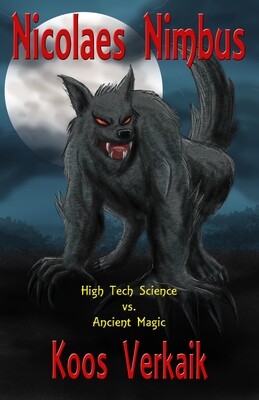
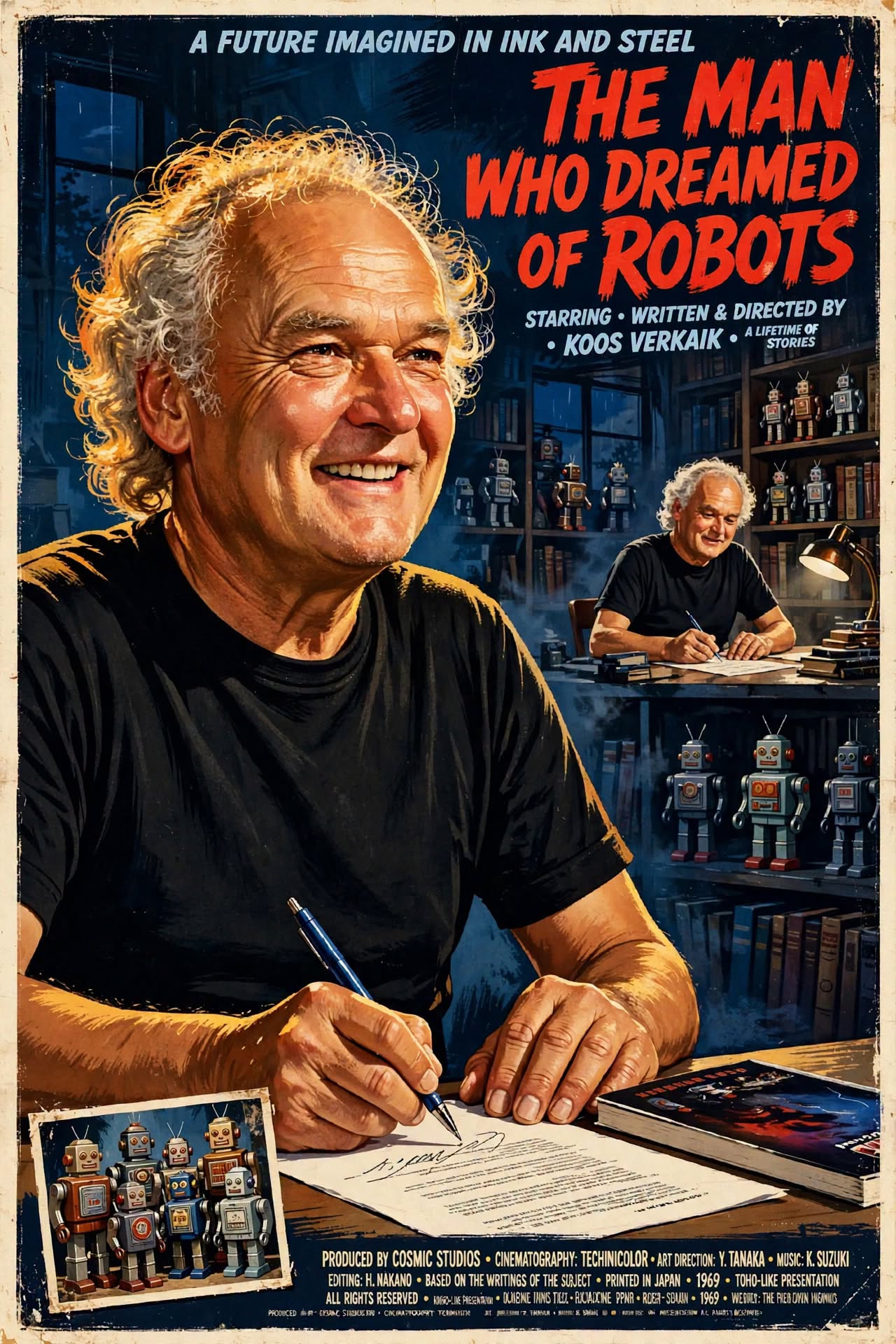
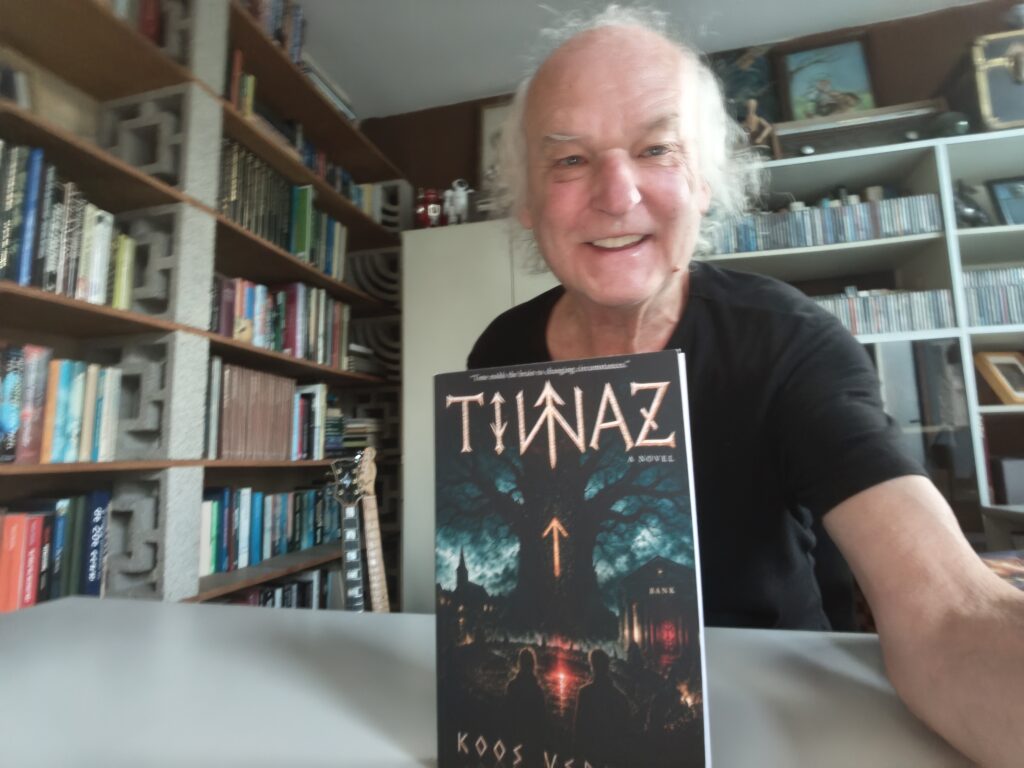
Outer Banks Publishing Group has been publishing Koos’ novels since 2018. He writes them faster than we can publish them. Koos lives in The Netherlands and many of his books have been translated into several languages.
He is the master of magic, mystery and adventure, with more than seventy different titles on his name. Started writing at the age of 7, first publications (comic scripts) when he was 16, first novel published when he was only 18 years old.
Historian/journalist Max Moragie wrote: “Anyone who has read or reread a novel by Koos Verkaik (I am now rereading it for the second time) has enjoyed a story that continues to fascinate and surprise, even if you know the outcome, but is also encouraged to muse about the essence of existence. A pulp writer doesn’t make you think like that, sometimes a literary author, but apparently a Verkaik always does.”
Koos Verkaik: “Life can be a cruel game with the meanest rules. Life itself is so complex, interesting and intriguing – and then there are the miracles, the unexplainable things, the scary sides of our behavior, the imposing wonder of the universe… That is what I write about, novel after novel.”
High time to ask him some questions:
OBPG – Your novels are always full of plot twists and different moments in time, you swerve from present to past, to future and back. You write about ancient gods and more than often mention jesters. Is the knowledge of history important?
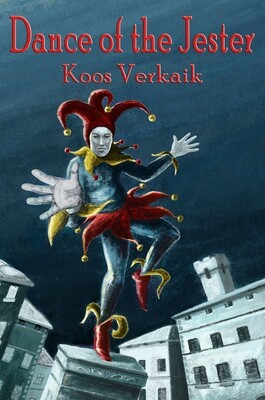
KV – Yes, it is. I have hundreds of non-fiction books in my workroom; I read about history and also have a collection of books about the great mysteries from alchemy to sorcery. I am interested in the characters of ancient gods. Jesters are my specialty. I studied the history of jesters and love their odd mentality. You can read my novel Dance of the Jester as a magical novel, but if you are able to read between the lines, you will recognize the dangerous signs of the present time.
OBPG – What is your most personal novel?
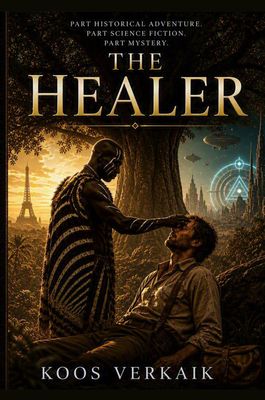
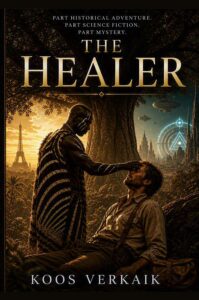 KV – Maybe The Healer. In short: Hector Fabry is dying of malaria in the African wilderness when a mysterious stranger wearing an okapi skin places a hand on his forehead.
Hector survives. He calls the stranger Okapi. But Okapi can do far more than heal. He possesses impossible strength, mysterious abilities, and secrets that seem to defy everything Hector knows about the world.
When Hector brings him to Europe, the mystery deepens—and ultimately leads them to Legio, a hidden civilization where time can be crossed, technology borders on magic, and an ancient catastrophe threatens everything.
The Healer is a sweeping adventure of mystery, science fiction, time travel, friendship, and the search for answers to questions humanity has always asked:
Who are we? Why are we here? And what lies beyond the limits of our understanding?
This is what makes it personal. As a kid, Hector Fabry is challenged by his father. Can he set a toy car actually in motion? Magic happens; the wheels start rolling…
As a boy, I had imaginary friends. And there was magic in my life. I made a ‘radio’ from a shoe box, copper wire, little metal objects and buttons and knobs. My father said it wouldn’t work and challenged me to turn it on. I refused. So, he pushed the buttons and smiled ironically when there was no sound. That moment I saw a glimpse of adult lack of imagination and that made a deep impression on me.
In The Healer it is even possible to construct devices to bridge time. Everything you can make up might be possible. I never wanted to become an adult who can only live by strict facts. Read my books and immerse yourself in the most fantastic situations.
OBPG – All-Father and Wolf Tears are Dutch classics, originally published by the prestigious De Arbeiderspers in Amsterdam. Can you tell me what these novels are about?
KV – Yes, of course. And by the way, thank you so much for publishing them in English. I am very proud of the beautiful paperbacks.
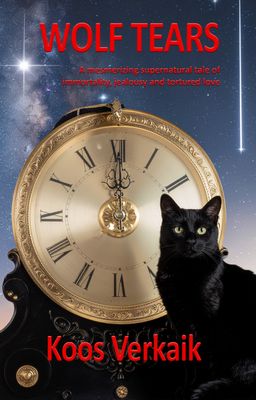
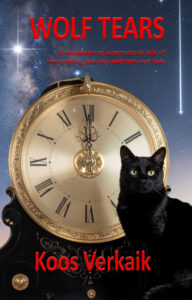 Wolf Tears is a pulse-pounding journey through time, memory, and music — the gripping saga of Paul Brand, a brilliant musician who uncovers a mind-shattering truth: he has lived countless lives across centuries, each time erasing his own memories to protect a secret too dangerous to know — his own immortality.
When Brand is drawn into the orbit of the enigmatic and world-renowned composer Francis Beck, everything changes. Beck holds a terrifying gift — the power to manipulate minds through music, bending reality and emotion with every note. His concerts don’t just move people; they possess them.
But when Beck dies in a mysterious car crash, Brand receives a cryptic envelope that unravels everything he thought he knew. Inside, a photograph of him and Beck, laughing together — in 1932. Decades before Brand was even born.
What begins as a search for answers becomes a dangerous plunge into a forgotten past — a past filled with love, betrayal, and the dark alchemy of eternal youth. At the heart of it all lies a fateful triangle: Brand, Beck, and the volatile Miethe — bound by obsession and a secret forged deep in the German woods, where a reclusive alchemist once offered them more than they ever bargained for.
Wolf Tears is a haunting tale of friendship turned rivalry, desire twisted into madness, and the terrible cost of defying time itself.
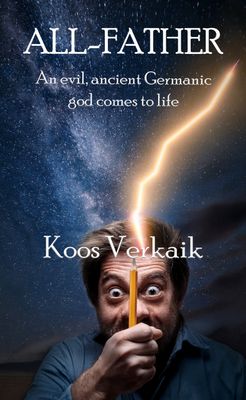
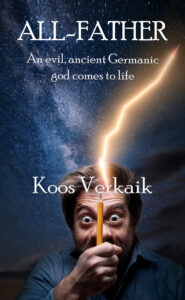 About All-Father – Peter Jonker was just a boy when the darkness found him.
Terrified and vulnerable, he fell under the spell of the enigmatic master painter Poolman—a man whose nightmarish canvases pulsed with a strange, terrifying power. Through these haunting works, Peter was drawn into the blood-soaked legends of Wodan, god of the ancient Germanic tribes, and the brutal, fearless berserkers of the north.
But these weren’t just stories.
Something in the shadows answered.
As pain and fear tore through his young mind, Peter unlocked something deep within himself—something ancient, raw, and otherworldly. Whispers began – he has immortal powers.
Now grown, Peter is unraveling. Haunted by the violent visions of his childhood, his grip on reality slips—and that’s when they come. Strangers, drawn to his vulnerability, with secrets of their own and plans more twisted than he could ever imagine.
And in the darkness, Wodan calls.
He wants Peter to march with the Army of the Dead—the berserkers reborn to wreak havoc once more. As Peter’s world spirals into madness, death stalks him. Four people are dead. Is he a murderer—or a pawn in a terrifying game?
The truth lies buried in his shattered mind.
And only hypnosis can tear it free.
OBPG – It is said that you never had a writer’s block. Is that true?
KV – Yes. I have a lot to tell. There is a constant chaos in my head, and I only find rest after I have typed ‘The End’ under a manuscript. And soon it starts all over again and I have to write write, write. Once I worked as a copywriter for an advertising agency and there, I learned to use the right words to bring over my thoughts. Short and to the point, as clear as possible.
When I sit down at my desk, I can start writing immediately.
As a kid I wrote in silence till late at night. No one knew about it. During that time, I wrote hundreds of pages with a simple ballpoint.
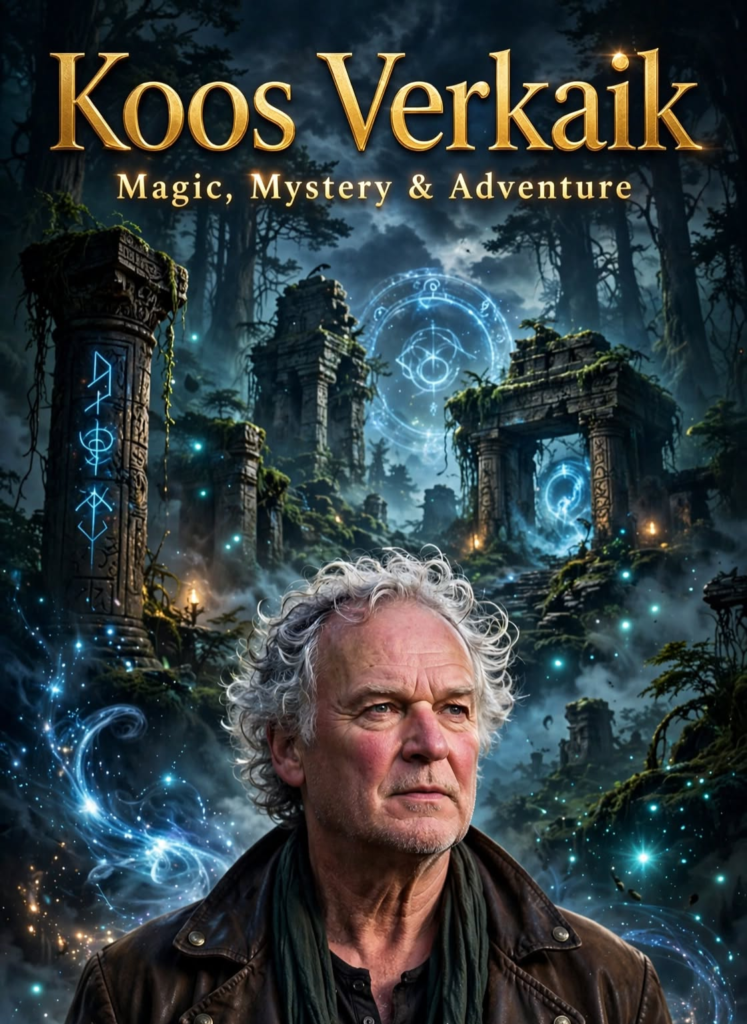
To learn more about Koos, visit his website at www.koosverkaik.com
Here is a list of Koos novels, published by Outer Banks Publishing Group
All-Father
Wolf Tears
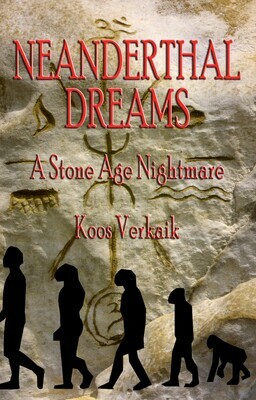
Neanderthal Dreams – A Stone Age Nightmare
The Nibelung Gold
Heavenly Vision
Nicolaes Nimbus
Dance of the Jester
Demigods
Tiwaz – Deadly Divine Power
The Healer – The Greatest Show on Earth
Violence on Nickel Dime Boulevard
The Lost Art
The Double
After the UFO Crash
Hellequin – The Creating Brain
Koos books are available in print and on the Kindle at Amazon.

Home page photo (above) – courtesy of the Greenville Historical Society.
Emancipation Day Celebration, June 19, 1900 – The Portal to Texas History.
Juneteenth is America’s second Independence Day — a celebration of liberation, resilience, and the ongoing pursuit of equality. It marks June 19, 1865, the day when Union troops arrived in Galveston, Texas, and announced that more than 250,000 enslaved Black Americans were finally free, more than two years after the Emancipation Proclamation. Wikipedia National Museum of African American History and Culture
Friday, June 19, 2026
Juneteenth — short for June Nineteenth — commemorates the end of slavery in the United States. Although President Abraham Lincoln issued the Emancipation Proclamation on January 1, 1863, it could not be enforced in areas still under Confederate control. Texas, the westernmost Confederate state, became the final stronghold where slavery continued despite the law. National Museum of African American History and Culture
Freedom arrived only when Major General Gordon Granger and roughly 2,000 Union soldiers landed in Galveston Bay on June 19, 1865, issuing General Order No. 3, which declared that enslaved people were free and would henceforth enjoy equal personal and property rights. Britannica
That moment — long delayed, deeply emotional — became known as Juneteenth.
On December 31, 1862, Black Americans gathered in churches and homes for what became known as Freedom’s Eve, waiting for the Emancipation Proclamation to take effect at midnight. When the clock struck twelve, enslaved people in Confederate states were legally free — but not yet physically free. National Museum of African American History and Culture
Texas’ geographic isolation and minimal Union troop presence allowed slavery to continue long after it was outlawed. Plantation owners migrated there to avoid Union lines, bringing enslaved people with them. Freedom did not reach Texas until Union forces arrived in person to enforce the law. National Museum of African American History and Culture
When General Granger read General Order No. 3, celebrations erupted among newly freed Black Texans. The day became an annual tradition beginning in 1866, first centered around church gatherings, prayer, and community meals. Wikipedia
This iconic photograph shows Black elders in Austin celebrating Juneteenth in 1900 — one of the earliest known images of the holiday. It reflects dignity, pride, and the determination to honor freedom publicly. texashistory.unt.edu
Music has always been central to Juneteenth. Brass bands, parades, and dancing were common features of early celebrations. historynet.com
Images like this one show the first generations of Black families living in freedom — rebuilding their lives, communities, and futures. nbcnews.com
Houston’s Emancipation Park, purchased by formerly enslaved men in 1872, became one of the most important Juneteenth celebration sites in the country. britannica.com
Juneteenth is more than a historical anniversary — it is a living tradition that honors:
It acknowledges the painful truth that freedom was delayed for hundreds of thousands of people, even after it was promised.
Juneteenth celebrates the strength, creativity, and endurance of Black Americans who built communities, institutions, and culture in the face of oppression.
The day encourages Americans to confront the legacy of slavery, Reconstruction, segregation, and ongoing racial inequities.
Modern celebrations include parades, music, food festivals, storytelling, and educational events — echoing traditions that began more than 150 years ago. Britannica
In 2021, Juneteenth became a federal holiday, thanks in large part to the lifelong activism of Opal Lee, known as the “Grandmother of Juneteenth.” Britannica
Juneteenth is a reminder that freedom is not just declared — it must be delivered, protected, and lived. It invites all Americans to reflect on the past while celebrating progress and committing to a more just future.
It is a day of remembrance, but also a day of joy — a celebration of a people who survived, resisted, and ultimately triumphed.
We face similar challenges today. We must not let our freedoms and Democracy be taken away.
The lawsuit against Kari Lake and Michael Rigas centers on allegations that they violated federal law and the First Amendment by turning Voice of America (VOA) into a vehicle for political messaging—raising profound legal and press‑freedom concerns. AOL Yahoo News Singapore
The lawsuit frames the alleged actions of Kari Lake and Michael Rigas as an unprecedented breach of legal safeguards designed to keep U.S. government‑funded journalism independent. If the claims are upheld, the case could set significant precedent on the limits of political influence over publicly funded media—and reaffirm the constitutional and statutory protections that anchor press freedom in the United States.
If you want, I can also break down the lawsuit’s potential outcomes, its historical parallels, or how it fits into broader debates about government‑funded media.
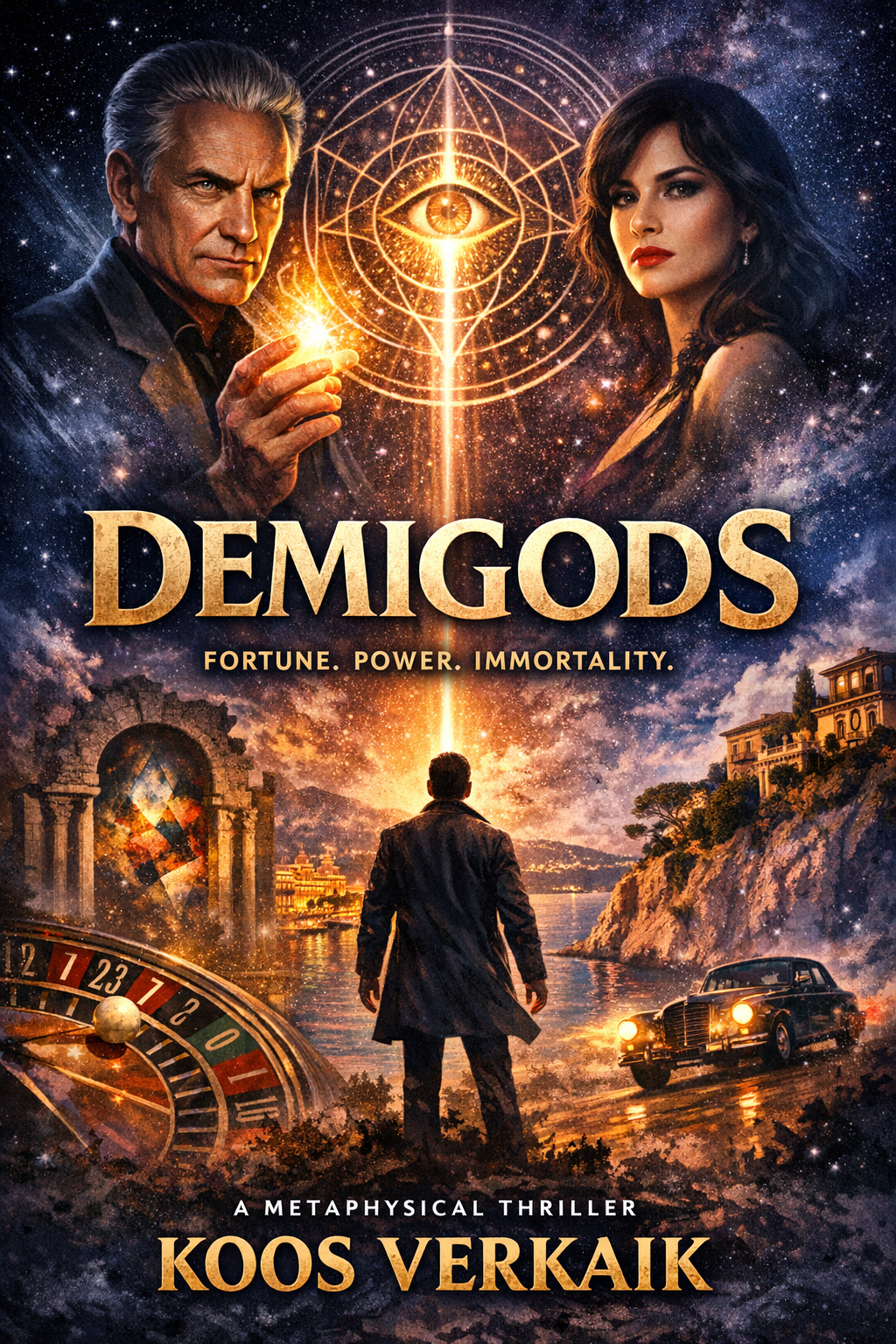
 DEMIGODS is a sweeping metaphysical thriller that begins on the sun‑drenched coast of Monaco and spirals into a world where art, mysticism, and human evolution collide.
Hans Winters is no ordinary wanderer. Gifted with an uncanny mind, a body hardened by endless pilgrimage, and abilities he barely understands, he drifts across Europe winning just enough at casinos to survive — until the criminal underworld notices. When a seductive stranger named Monaco lures him into a trap, Hans discovers he is being hunted not for what he has done, but for what he is.
His only hope lies with Augustin Flamel, a world‑famous illusionist whose impossible stage acts – including making cars vanish into thin air – may not be illusions at all. Both men share a secret connection to the long‑lost Brotherhood of Helgen, the mysterious “Austrian Twentiers,” whose abstract art hides cosmic messages and whose experiments may have unlocked powers far beyond human limits.
As Hans is drawn into Flamel’s inner circle, he learns the truth: something alien, ancient, and transformative has taken root inside him – the same force that once touched the Brotherhood. A force that can heal, destroy, or even tear open the fabric of space.
But when Monaco is kidnapped by a ruthless mafia boss, Hans must choose between the woman he loves and the destiny he never asked for. His journey will lead him from glittering casinos to hidden estates, from mystical artworks to the threshold of other worlds.
DEMIGODS is a novel of cosmic possibility, human longing, and the terrifying price of transcendence – a story that asks what happens when ordinary men brush against the infinite.
Koos Verkaik is the author of more than 70 books from children’s fantasy, scfi, mythology and now metaphysical. Learn more about Koos at his website: KoosVerkaik.com
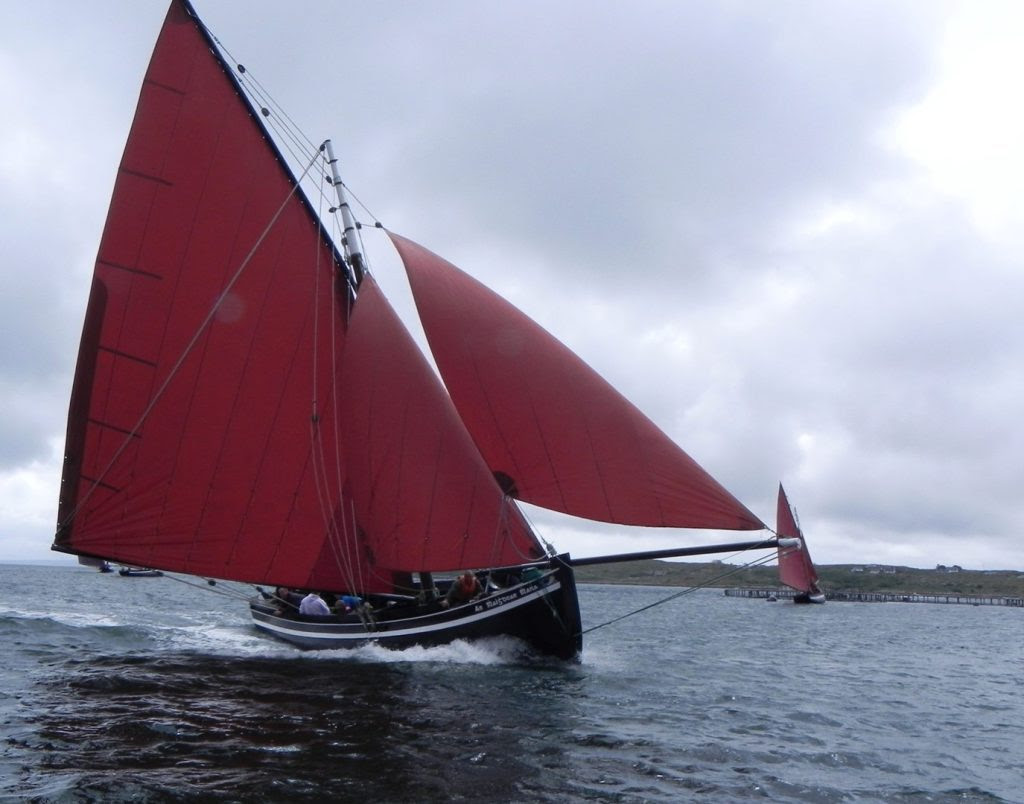
Below is a ballad composed by one of our authors, Stephen A. Carter, for the Galway Sailing Club located in Galway, Ireland.
Stephen is also the author of the four‑book Matari Series, a fact‑driven historical fiction saga that explores the U.S. Civil War and highlights the pivotal contributions of Black Americans to the conflict.
THE GALWAY HOOKER
Sleek fishing boat, red sails full blown
In foaming wake she cruised alone.
Upon her deck a lad did sway,
Kept looking back across the bay.
From Claddagh town his tearful bride,
Upon a dock stood tall and cried.
White hanky danced upon the wind,
As em’rald eyes upon him pinned.
To starboard bow Clare Hills rose high,
Through spray the hooker scudded by.
All sails lay taut before the blast,
Aboard a groom clung to a mast.
The Galway hooker flew away,
Across North Sound that fateful day.
From Inishmore to Rossavail,
That night o’er surf heard widows wail.
At dawn a body washed ashore,
Found by a pregnant paramour.
Today her ghost still haunts the scene,
And in the wind one hears her keen.
Refrain:
A Galway hooker sailed away,
And took her love across the bay.
A widow waits upon the shore.
Will she be pining evermore?
Welcome to our book store
We hope you find a book that will enlighten your life







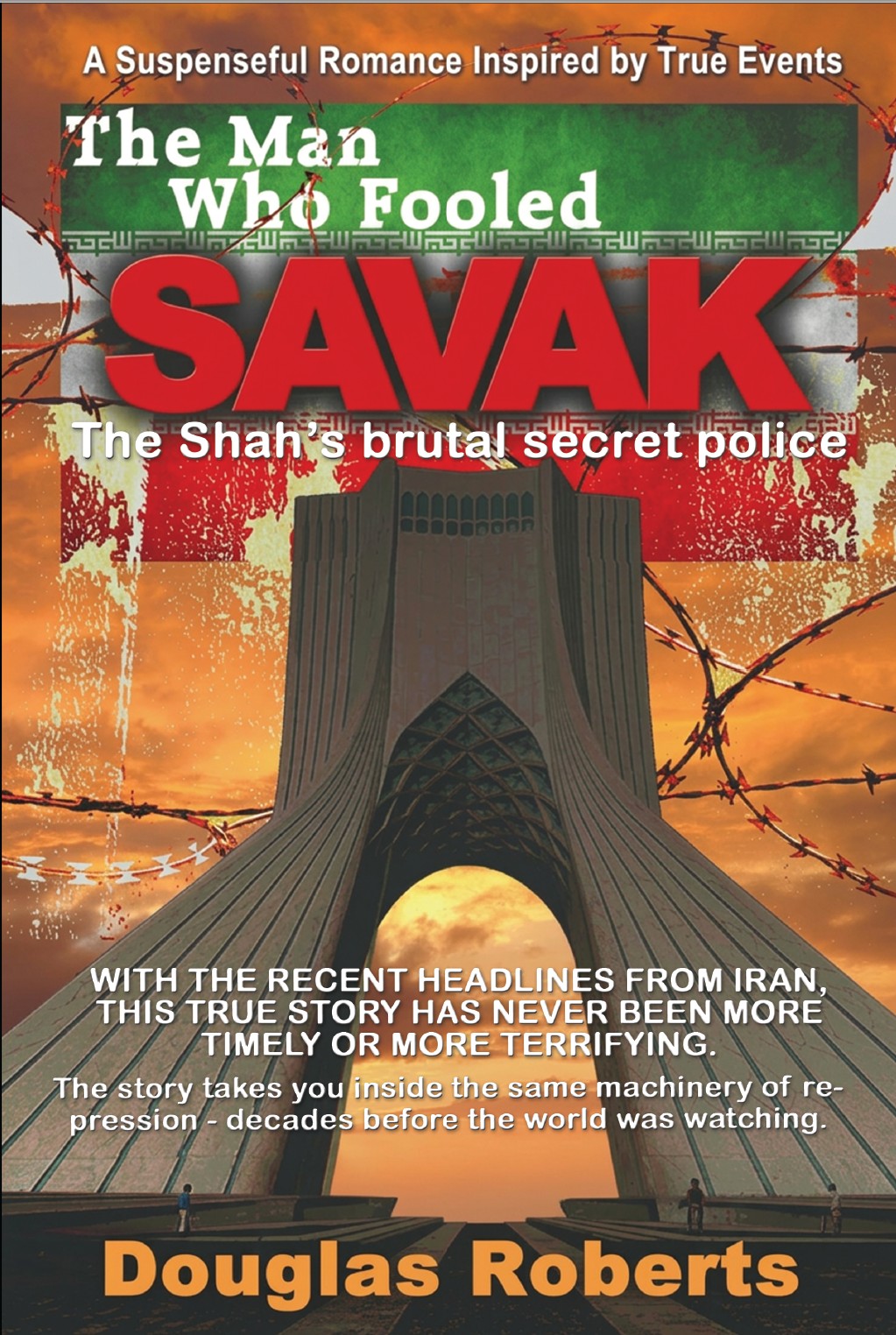
NOW MORE IMPORTANT THAN EVER — EXPERIENCE WHAT LIFE UNDER A REPRESSIVE DICTATORSHIP FEELS LIKE.
As Iran once again dominates global headlines, this true story pulls you inside the fear, brutality, and impossible choices ordinary people face under authoritarian rule.
A young American soldier discovers the truth about a regime built on terror — and risks everything for love.
Doug Roberts, a former anti‑war activist drafted into the U.S. Army, arrives in Tehran expecting routine duty. Instead, he’s assigned to a classified message center where he uncovers evidence of deep corruption and the iron grip of SAVAK, one of the most feared secret police forces of the modern era.
He doesn’t need documents to confirm the danger — he sees it in real time as his Iranian girlfriend and her mother become targets of SAVAK’s escalating repression. When Doug himself is marked for surveillance and intimidation, he realizes he has only one choice:
Act — or watch the people he loves disappear forever.
What follows is a daring, high‑stakes plan to smuggle them out of Iran before SAVAK closes in. Every step could mean arrest, torture, or death. Every decision could cost him his life.
This is a gripping romantic thriller about courage, freedom, and the extraordinary lengths one man will go to protect the people he loves. Inspired by true events.
Hillary Clinton, former Secretary of State and presidential candidate, argues that a growing segment of the MAGA movement has embraced cruelty as a political strategy and is actively rejecting empathy as a civic and moral virtue.
She connects this trend to recent events in Minnesota, where federal agents killed two young people and political leaders quickly framed them as terrorists.
Clinton highlights how certain Christian nationalist influencers now portray empathy as dangerous or even sinful, reshaping religious rhetoric to justify authoritarian impulses. She warns that this anti‑empathy ideology fuels polarization, dehumanization, and the erosion of democratic norms.
Clinton calls for a renewed commitment to compassion – both within faith communities and in public life – as essential to resisting extremism and strengthening democracy.
Read the full story in The Atlantic.
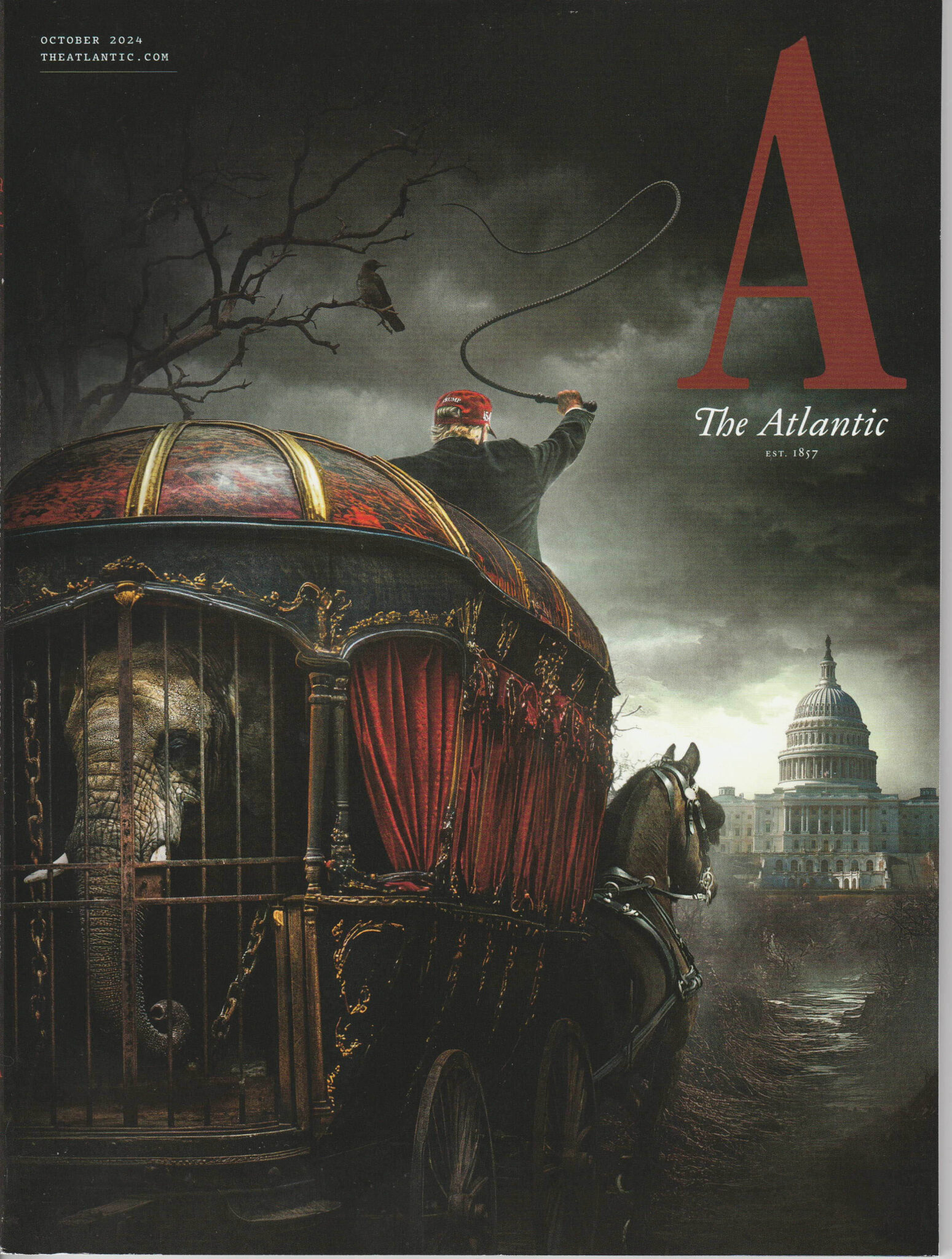
 I’ve never been much of a magazine subscriber. With the endless stream of information online, it’s easy to feel like everything worth reading is already at my fingertips. But the October 2024 cover of The Atlantic stopped me cold. It wasn’t just striking — it felt like a warning.
The illustration, a circus wagon rendered in a style reminiscent of Ray Bradbury’s Something Wicked This Way Comes and the eerie Americana of Stephen King, carried a sense of foreboding that was impossible to ignore. Designed by Justin Metz, the image captured a mood I couldn’t shake: a sense that something dark and familiar had rolled back into town.
And then, as the months unfolded, it became clear that the cover wasn’t simply evocative — it was prophetic.
The 2024 election brought with it a political atmosphere that felt uncomfortably aligned with the imagery on that cover. The sense of spectacle, the creeping dread, the feeling that the country was being pulled into a performance none of us auditioned for — it all echoed the visual language Metz had created.
The cover didn’t predict specific events, of course, but it captured the emotional truth of the moment. It distilled the unease many felt into a single, unforgettable image.
Part of what makes The Atlantic so compelling is that it has always understood the power of context. Founded in 1857 by a group of abolitionists, the magazine has spent more than a century and a half examining American culture, politics, and identity with a long view of history.
That legacy matters. It’s what allows the publication to draw lines between past and present — to show how old patterns resurface in new forms, and how cultural anxieties often echo across generations.
The October 2024 cover wasn’t just a clever piece of design. It was part of a tradition of cultural commentary that stretches back to the magazine’s earliest days.
After seeing that cover — and after watching the months that followed — I realized something: I wanted to support journalism that could capture a moment so precisely, and that could contextualize it with depth and historical awareness.
So I subscribed.
It felt like a small investment in a publication that consistently delivers clarity in a noisy world. The price wasn’t the reason I subscribed, but it certainly made the decision easier to justify.
We live in a time when images move faster than understanding. But every so often, a piece of art cuts through the noise and tells the truth before the headlines do. The October 2024 cover of The Atlantic was one of those moments — a reminder that design, storytelling, and journalism can converge to illuminate the world around us.
And sometimes, that’s worth subscribing to.
The Atlantic magazine was founded in 1857 in Boston as The Atlantic Monthly, a literary and cultural magazine that published leading writers’ commentary on education, the abolition of slavery, and other major political issues of that time. Its founders included Francis H. Underwood and prominent writers Ralph Waldo Emerson, Oliver Wendell Holmes Sr., Henry Wadsworth Longfellow, Harriet Beecher Stowe, and John Greenleaf Whittier, according to Wikipedia.
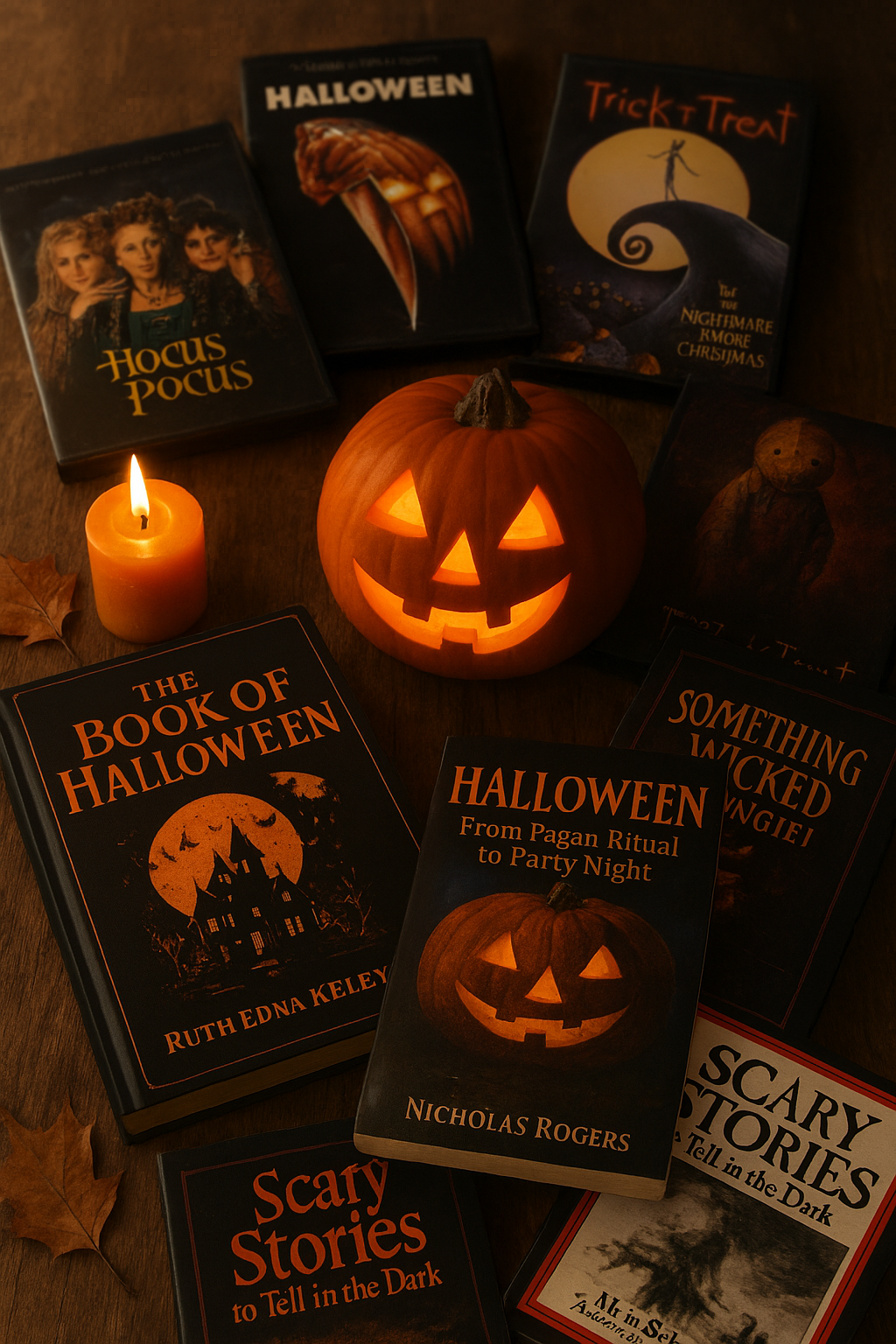
Halloween is more than costumes and candy—it’s a centuries-old celebration rooted in ancient rituals, spiritual beliefs, and cultural evolution. This blog post explores its origins and highlights books and movies that capture its eerie magic.
Halloween, celebrated every October 31st, traces its roots to the ancient Celtic festival of Samhain. Over 2,000 years ago, the Celts marked the end of summer and the beginning of the dark winter with Samhain, believing that on this night, the boundary between the living and the dead blurred. Spirits were thought to roam the earth, and people lit bonfires and wore costumes to ward them off Rosetta Stone History.
In the 8th century, Pope Gregory III designated November 1st as All Saints’ Day, incorporating some Samhain traditions. The night before became All Hallows’ Eve, eventually shortened to Halloween. Over time, the holiday evolved into a community-centered celebration with trick-or-treating, jack-o’-lanterns, and spooky storytelling History.
Whether you’re curious about Halloween’s history or craving a chilling read, these books offer both insight and spine-tingling entertainment:
Halloween wouldn’t be complete without a few cinematic scares. These films have become staples of the season:
Halloween is more than just a night of costumes and candy—it’s a celebration of mystery, imagination, and the thin veil between worlds. It invites us to confront our fears, honor the past, and revel in the macabre. Whether you’re reading about its origins, watching a horror flick, or diving into a spooky novel, Halloween offers a unique lens into our cultural fascination with the unknown.
So light a candle, carve a pumpkin, and let the spirits of Halloween guide your night.
Sources: Rosetta Stone History istruestory.com
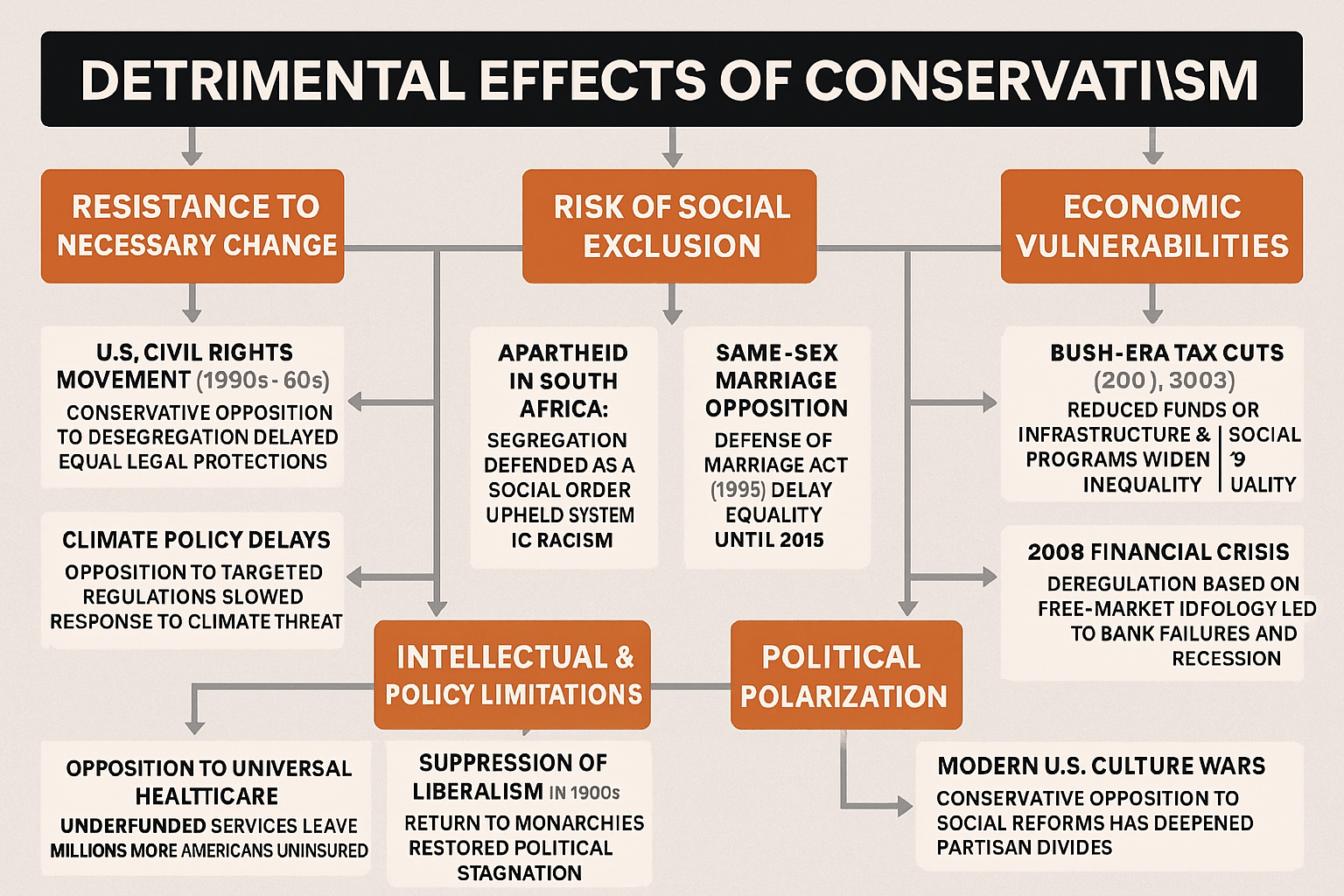
Conservatism, like any political ideology, has both advocates and critics. When critics talk about its detrimental effects, they often point to patterns that can emerge when its principles are applied rigidly or without adaptation to changing circumstances. Here are some of the most commonly cited drawbacks:
Let’s ground those potential downsides of conservatism in concrete historical and contemporary examples. These illustrate how the principles, when applied rigidly, have sometimes produced the kinds of effects we discussed earlier.
Sources
Three Problems with Conservatism | Libertarianism.org
Pros and Cons of Conservatism – Pros an Cons
The Impact of Conservatism

If you vote for Trump and his MAGA GOP members you may indirectly start World War III.
If Trump and his MAGA GOP take control of our Congress, they will cut off support for Ukraine. They already cut support on the advice of Trump when the Congress was ready to approve the spending bill with support for Ukraine.
What will happen next?
said Larry Jacobs, director of the Center for the Study of Politics and Governance at the University of Minnesota. “This is supposed to be the party of conservative principles, of tradition, of respect for customs and rules that make society governable.
“The idea that the law does not apply to Republicans is something that has now become part of the mainstream of the Republican party. We see it in terms of the approach to elections. We see it in terms of the treatment of immigrants. Some of the actions with regard to abortion may approach that level. The Republican party appears to consider the law and the constitution to be optional and to have lost legitimacy.”
From The Guardian
Republicans’ lawless leaders at odds with midterm law and order message | Republicans | The Guardian
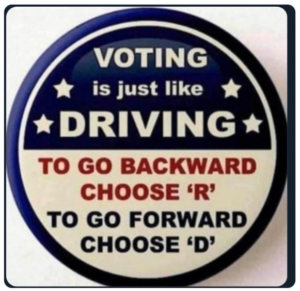
If you vote Republican you are supporting:
– 19 GOP red states have pending laws suppressing voter’s ability to vote. Historically, dictators and Fascists have suppressed votes to stay in power.
– The GOP has come out in support of QAnon, The Oath Keepers and the Proud Boys
– You may lose a loved one, a relative or a friend in a train crash, a bridge collapse or a plane crash as Republicans strip funds from President Biden’s infrastructure bill.
– The Texas abortion ban if left to stand will be passed in several other GOP states. Idaho will pass an anti-abortion law based on the Texas law. 16 states have “trigger” abortion ban laws.
by the US Supreme Court.
https://cnn.it/3RaW1zm
https://nyti.ms/3IcANNo
With the recent Supreme Court banning EPA authority from polluters
https://bit.ly/3IfQ1Bf
on Gun Purchases – will never get passed.
Watch Jimmy Kimmel’s emotional plea to improve gun purchase background checks
https://cnn.it/3AnRweO
– will never go up leaving 18 states still paying $7.25 an hour.
– the last thing America needs are conservative leaders, especially some Republicans who want to keep America from progressing. The last thing America needs is backward-thinking leaders in the 21st Century.
– Republicans have turned to cheating to stay in power or to get back into power…and nothing is getting done by them for the American people.
The enforcement or advocacy of strict obedience to authority at the expense of personal freedom.
and everything America stands for: Truth, Justice and Liberty for all? Look what is happening in Ukraine.
*Of course, not all Republicans are like those described above. Here is a list of those who should stay in office.
House of Representatives – those who voted to impeach the former president
Senate – The Republicans who voted to convict the former president after impeachment:
YOUR VOTE COUNTS. It’s a lie to think otherwise.
Paid for by Jake Stone for American Democracy
VOTE like your freedom depended on it…because it does.

 Books of the NY Times