
By Mary L. Tabor
Outer Banks Publishing Group author
How does autobiography work in fiction?
Subtitle: Why my collection of short stories The Woman Who Never Cooked might in some sense be called non-fiction. Here’s the probing answer to the difficult question, Where is the TRUTH? (*asterisks refer to footnotes at the end of this essay).
You know the line: Truth is stranger than fiction? I have a twist on that. I’ve learned through the writing of three books and a fourth in process* as I write this essay that the fictional account of my stories have greater emotional truth and intellectual significance than the factual ones.
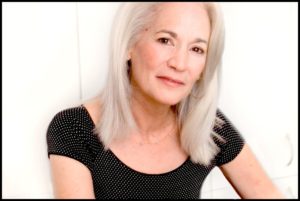
Mary L. Tabor
As memoir has increased in popularity** both in books and movies—“A True Story” being the familiar movie tag—I’ve continued to argue that fiction, written close to the bone, will likely provide the reader with a deeper look into the life and soul of the writer, but more important, the reader if the story is worth your time.
Think first of this question, one that I pose to myself for purposes of this essay: Do you think self-revelation is part of the process of writing?
My answer: Any serious writer who denies it, lies.
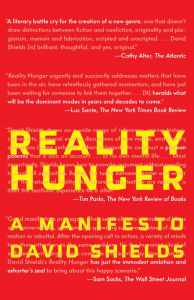
Reality Hunger by David Shields
I agree with David Shields who argues in favor of self-revelation and to a large extent against the novel that is not self-revelatory. He does so in Reality Hunger through a series of quotes, occasionally his own—unabashedly without full attribution (but that’s another story) using only the name of the writer. Here’s John Berger, “Authenticity comes from a single faithfulness: that to the ambiguity of experience.” And later, the late David Foster Wallace, “I don’t know what it’s like inside you and you don’t know what it’s like inside me. A great book allows me to leap over that wall: in a deep, significant conversation with another consciousness, I feel human and unalone.” ***
A serious writer can’t help but reveal even as the lie of fiction operates.
Lee K. Abbott, a writer and teacher I know and admire, has put the issue succinctly this way: “All stories are true stories, especially the artful lies we invent to satisfy the wishful thinker in us, for they present to us, in disguise often and at great distance, the way we are or would want to be.” ****
My collection of short stories includes three memoir pieces I don’t identify and I will use them here to explain why I argue that the fiction is more powerful, more truthful, if you will, than the so-called true story.
First, I give as example a comparison of what is essentially the same story told in fiction and also in memoir.
I put aside my novel Who by Fire (reviewed by Michael Johnson, regular columnist on FactsandArts.com) that was close to finished when my husband said after 22 years of marriage, oh-so-Greta-Garbo, “I need to live alone.”
This event stopped me in my tracks—and eventually I blogged my life while I was living it. That blog turned into the memoir (Re)Making Love. That book like Who by Fire is a love story but oddly one that fiction would probably not find credible.
I learned through these two books that the fictional account of my story has greater emotional truth and intellectual significance than the factual one that you can find online and in the 2011 Valentine’s Day issue of Real Simple Magazine where my husband and I tell our story.
Here’s how I learned what the so-called true story didn’t reveal. I am the reader for the audible.com version of Who by Fire. While reading it aloud in an NPR recording studio, I discovered my own book as if for the first time. I realized I’d written this novel to find the man I must have known on the unconscious level I was losing. Good fiction, meaning you know while you’re reading that the writer is risking her life, can go to this place of hard truth in a way that memoir because of its hold on the so-called facts can’t do if the writer is honest—and honesty is the key word here to understand my meaning.
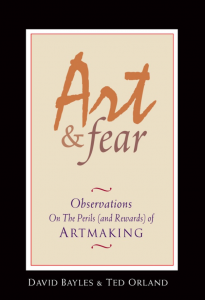
Art and Fear by David Bayles and Ted Orland
In their book Art and Fear, David Bayles and Ted Orland explain our resistance to fiction—or to any art—this way: “[T]he prevailing premise remains that art is clearly the province of the genius (or, on occasion, madness). … [A]rt itself becomes a strange object—something to be pointed to and poked at from a safe analytical distance. To the critic, art is a noun.
“Clearly, something’s getting lost in the translation here. What gets lost, quite specifically, is the very thing artists spend the better part of their lives doing: namely, learning to make work that matters to them. … [W]hat we really gain from the artmaking of others is courage-by-association. Depth of contact grows as fears are shared—and thereby disarmed—and this comes from embracing art as process, and artists as kindred spirits. To the artist, art is a verb.” *****
I decided to further prove the force of fiction by revising the title character’s name to Olivia in each of The Woman Who Never Cooked’s stories. The allusion is to that character in Shakespeare’s Twelfth Night, the comedy that takes center stage in the story “Madness and Folly” about my father after he broke his hip—in real life and here in fiction.******
I could say that I am hidden inside the fiction—but in fact I am not. In the fiction, I used food and adultery as metaphor for the grief I bore through my mother’s, my father’s and my sister’s illnesses and deaths. I wasn’t sure who I was. As a prime example, I didn’t know when I wrote “The Woman Who Never Cooked,” the title story, that I would become that woman.
When I first wrote each of the stories the central character had the same name in every story because I knew that what I was doing was direct, tough purposefully artful exaggeration of my autobiography. My agent at the time suggested that I change the main character’s name to hide that fact. But the book only achieved publication after I added two of the three memoir pieces that had been published in literary magazines. All the stories have been published first that way, and the importance of the small literary magazine, I talk about here. You may go there and read that essay, entitled “Miss Rich is married and living in Cambridge, Mass.”, referring to the poet Adrienne Rich in an early bio when she first published, and the essay names places you might also choose to publish your work.
The stories in the collection that are memoir are: “Rugalach,” a tribute to my mother; “Losing,” a tribute to my father; and the eponymous closing story “The Woman Who Never Cooked.”
Let’s talk about the fiction and why I am now convinced that each of the other eight stories is more powerful, more truthful than the memoir—with the exception of “The Woman Who Never Cooked.” I say this about the last because it is written in third person like a fairy tale. The opening line is, “There once was a woman with 327 cookbooks who never cooked.” Through food, this true-to-its-core memoir tells the story of my mother’s, my father’s and my sister’s illnesses and the effect on living that their trials had on me.
For the second edition, I changed the central character in all the stories to “Olivia.” You may read one of the short stories “The Burglar” for free here at The Santa Fe Writers Project where the collection won the grand prize. That story and was published twice before appearing in the book of short stories. I’ll use this story to explain.
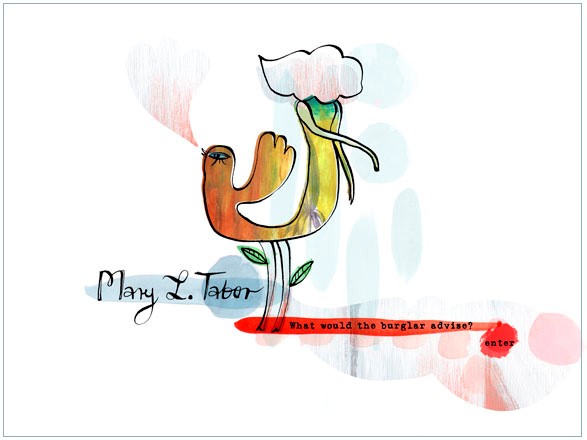 The image above that I use on my website was designed by Zaara.com and uses the line “What would the burglar advise?” a line inside the story—not exactly a line you’d expect in a story written as non-fiction.
You would think me mad if I’d written this as memoir because the actual burglar is alive and well in this story—something only fiction can achieve without madness. Even Robin Hood and maid Marian appear in the story in an Internet game.
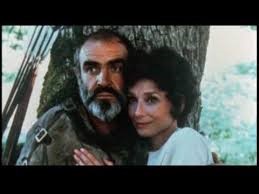 Audrey Hepburn as Maid Marian and Sean Connery in the 1976 flick.
But the burglar himself is essential to express the love letter to my husband that I wrote here in the aftermath of my mother’s death and a burglary that actually did occur in our home while we were away visiting both our children at college. These facts I compress into the story’s essence.
So where is the truth? Does Ruth/Olivia actually desire the burglar? Does a burglar come to her home from his on Virgilia, a street near mine where the burglary actually occurred? Does it matter that I still own the locket that is in the burglar’s pocket and that the actual burglar chose all my other jewelry to steal and left behind the locket with its crude seal?
With that fact, the story wrote itself. Locket in hand that my mother had saved with a lock of her mother’s hair sealed inside, I went on the journey of discovery and the result is heartfelt non-fiction that cannot accurately be called that.
Joyce Carol Oates has put the conundrum of literary fiction so often spurned for the “true” story because, What can one learn from a “fiction”? this way:
“So much of literature springs from a wish to assuage homesickness, a desire to commemorate places, people, childhoods, family and tribal rituals, ways of life—surely the primary inspiration of all: the wish, in some artists clearly the necessity, to capture in the quasi permanence of art that which is perishable in life. Though the great modernists—Joyce, Proust, Yeats, Lawrence, Woolf, Faulkner—were revolutionaries in technique, their subjects were intimately bound up with their own lives and their own regions; the modernist is one who is likely to use his intimate life as material for his art, shaping the ordinary into the extraordinary.” *******
What I hope to have done here and for all the stories I’ve written that are quote fiction is to lift the curtain on that much misunderstood word. I argue that to dismiss out of hand the truth that close-to-the-bone, self revelatory fiction reveals is to miss a connection that may reveal to you those quote truths that would otherwise remain unspoken. The reason? Fiction, like all the arts that reveal through artifice, frees the unsayable. Why oh why would any of us who read or go to movies or art museums or photographic exhibits wish to miss that unsayable truth because we want the quote true story?
· *Dangerous Love my novel (am completing now).
· ** As an example, Leigh Gilmore, author of The Limits of Autobiography, notes that “…[T]he number of new English language volumes categorized as ‘autobiography or memoir’ roughly tripled from the 1940s to the 1990s. (Analysis based on data from the Worldcat database). See p. 1, footnote 1 of her book, Cornell University Press, 2001.
· *** David Shields, Reality Hunger, “412’ John Berger, p. 139; ‘421,’ David Foster Wallace, p. 141, Alfred A. Knopf, 2010.
· **** Lee K. Abbott, “Fifty Years of Puerto Del Sol,” Puerto Del Sol, Vol, 50, 2015, p. 194.
· ***** David Bayles and Ted Orland, Art and Fear, Capra Press 1997 p. 89.
· ****** Mary L. Tabor, The Woman Who Never Cooked, Mid-list Press, 2006. Mary L. Tabor, The Woman Who Never Cooked, second edition kindle and paperback version, Outer Banks Publishing Group, 2019.
· ******* “Inspiration and Obsession in Life and Literature,” Joyce Carol Oates, New York Review of Books, August 13, 2015.
Knightmst
5.0 out of 5 stars
An Intriguing and complex “jigsaw” puzzle of a read.
December 24, 2018
Religious cults have been part of our world for ages if not just thru stories, but actual cults that can be found throughout this world. They have filled the void for those who felt lost and needed a sense of belonging. They have filled the void for their leaders who wish to corrupt a religion to get people to their bidding. There are of course numerous reasons why people both join, and start a cult and would be a story upon itself.
I bring up religious cults as they will become part of the story of Author Koos Verkaik’s aptly titled book Heavenly Visionxs. A book that will find a reader facing different time periods as a story unwinds thru the words with in the pages of this book. The book will introduce the reader to a wide range of characters, and even a range of time periods.
The book starts interesting enough in the year 1745 and will introduce the readers to ship captain Adriaen Kalf. The Captain will have the most unfortunate events that will cause the man to see formal charges filed against him. The events that lead to his charges will be found spelled out in an old Atlas that falls into the hands of one Jan Glas.
As we continue to read the book, we find out that Captain Kalf had taken on a very unique device that time has nearly forgotten about. I write nearly, as Glas will be involved in helping an article get written about Kalf and it leads to an invitation to a symposium held by a publishing company. The company, Arnold McKay Publishing, is being the magazine ParaPsycho. It is during the symposium that many of the other key characters in the book will come into the picture. There is Pamela Mitchell from the magazine, a Hellen Derringer from a group called the Third Eye Association, and the beautiful Mary Landock.
The events in, Heavenly Vision, will start growing more and more intriguing during this event. Mary has her purse stolen that leads to a chase, police involvement and so much more. These events will eventually lead to Jan Glas, in England waking up in a Hospital. There is much that is being left out on purpose as one must really get to read how this all happens as it is exciting and very intriguing.
The book will lead you back in time a few more times as you read the pages. One of the more interesting, trips to the past, will involve the introduction to Manuel Raso back in the late 1880’s in several southern US States. Our introduction to him will tell the tale of his unique gift that potentially came from a kick to the head by a horse. A gift that will leave many in tears, but grateful for meeting the man. A gift that will find him gaining a “cult” like following and eventually a formation of a town in Florida.
All of these past events will somehow find themselves tying back to Jan Glas, ParaPsycho and Arnold McKay. They will also go back to that secret cargo that Captain Kalf had upon his ship. All of these pieces are tied together much like a jigsaw puzzle being completed. The rush of finding a place for each piece, and that feeling of nearing completion will be felt as you read what Author Koos Verkaik has laid out within the pages.
I do realize some people do not like stories that seem to jump around from one period to another. I however found this to be a great tool within the story and added so much to this book. There was just the right amount of changes that it did not take away from the overall enjoyment of the story. In truth, it only added to the complete puzzle as things are unveiled as you reach the finale of the book. Those who enjoy mysteries, suspense and intrigue will surely enjoy this book by Koos Verkaik.
Sheri A. Wilkinson
5.0 out of 5 stars
Fanastic!
September 19, 2018
In 1745 an old manuscript is found in an old atlas of Cape of Good hope. Captain Adriaen Kalf tries to figure out its meaning. In current time, a man from Amsterdam Jan Glas learns of a machine that could end the world. He embarks on a journey to England and the USA to learn more about this. He meets a man in the United States from The Center of The Heavenly Vision, who claims that this machine is real and will indeed will kill people.
Jan encounters some strange people and events, could this manuscript from the past be connected to this killing machine? Does this machine exist? And is this “prophecy” going to come true? A cast of likable, unlikable and quirky characters, along with a very original and interesting story makes for a fantastic read.
I liked the writing style, going back to the past and present, and the characters, all unique in their own way. I recommend Heavenly Vision to those who like adventure , drama and excitement. I also recommend The Nibelung Gold also by Koos Verkaik.
Sandra K. Stiles
4.0 out of 5 stars
Very Interesting
September 19, 2018
If you like books that bounce back and forth between the past 1700s, and the present then this is the book for you. It makes it a little confusing, but if you are willing to hang in there it all becomes clear in the end. In the past we have an old manuscript, in the present we have a machine that is said to be able to end the world. What are the connections if any between these two? The author has taken these two events and woven them into a story that will have you reading cover to cover just to find that connections. Once again this author has created a book that grabs you and forces you to read to find the answer to all of those questions you had at the beginning. I applaud him for this ability.
I received a copy to facilitate my review. The opinions expressed here are my own.
R M
5.0 out of 5 stars
Intriguing
January 12, 2019
Heavenly Vision by Koos Verkaik was a very intriguing read right from the start. The way the many characters and situations flow in and out like a giant puzzle throughout keep the reader interested. The end of course was satisfyingly brilliant as all the ties connect. I don’t like to give away spoilers but I will say between the haunting document of 1745, a paranormal preacher of a strange cult and good old fashioned modern revenge make for a book I could not put down…. LDM
Thomas H Redlin
5.0 out of 5 stars
Hats off to Koos Verkaik!
January 6, 2019
Five stars for this book and a big hurray for the author! Yes, indeed, nothing is what it seems, in this new, exciting Koos Verkaik novel… It starts with the finding of an old manuscript hidden in an old atlas of the Cape of Good Hope, around the year 1745.
“Allart Vroom climbed down from the ship, and we stood ready to catch him,” wrote Captain Adriaen Kalf. “His clothes, his flesh, his bones pulverized in our hands. He formed a small heap of powder at our feet. Please, believe me—it is not, like someone suggested, the contents of broken hourglasses.”
Jan Glas, an Amsterdam publicist, reads about a machine that could cause the end of the entire world! Of course, he wants to find out the truth about the remarkable manuscript! A long journey takes him to England and the USA.
A peculiar man crosses his path – Wesley Dunn, Raso Preacher, Center of the Heavenly Vision, Franks Knight, Florida, USA. This man says that the world will be destroyed by ‘the Machine of Colton’, which is also mentioned in the manuscript that Jan found! Only a few people will survive – the true followers of the odd Mr. Wesley Dunn, and the Raso way of life!
Murder, mystery and intrigue will keep the reader guessing as to what is going on. Is the world coming to an end, and if so, who will survive?
This is a thriller that keeps you wondering how the author managed to come up with so many ideas, this is almost insane. Hats off to Koos Verkaik!
Available at our bookstore and on Amazon.com as well as fine bookstores everywhere.
By Anthony S. Policastro, Publisher When writing a novel it is a bit like taking that award-winning photograph. Don’t worry, you don’t have to take great photographs to be a great novelist.
In today’s world with dozens of media channels bombarding us every minute of the day, your book has to stand out from all the noise.
Here are elements that should be included in your novel and help to make your book stand out. You can pick and choose a few or include all, but you should have at least one.
Now here is how writing is like photography. Look at the photo below. Pretend it’s your realty – what you perceive through your senses. Now write a story about that photograph. You would describe the scenery, the asphalt path, the fallen leaves and twigs…overall what you wrote is pretty boring and a nondescript story unless those elements play a part in your plot.

Neuse River Greenway trail, Raleigh, NC
If you look closely or view the scene from a different angle or perspective there is a better story there. 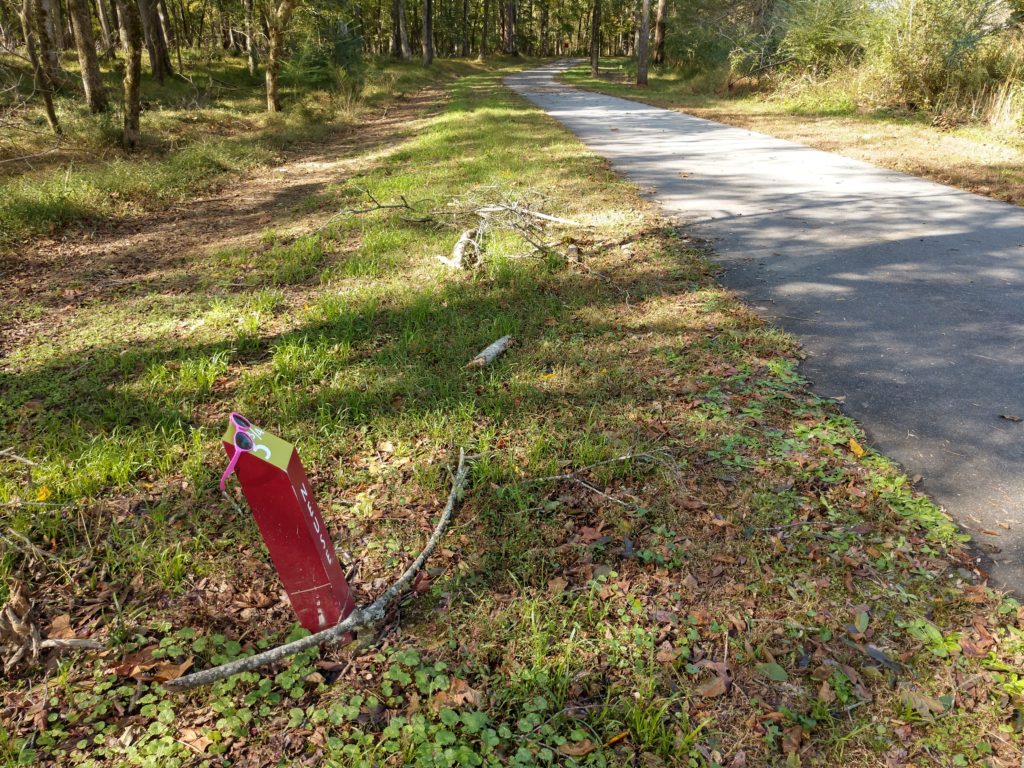 The story reveals itself upon a closer look – a nice person found the pink sunglasses on the trail and was considerate enough to place them on the milepost, hoping the person would pass this way again and find the sunglasses. Out of the reality emerges a story.
 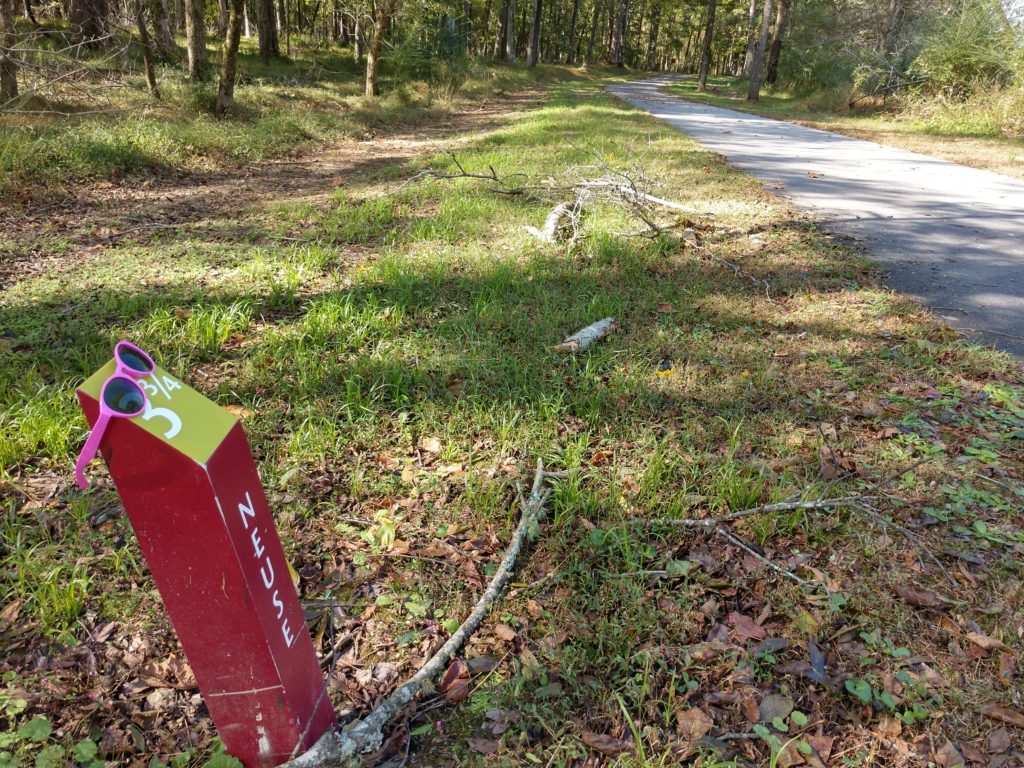 The photographer views and analyzes the light, shadows, colors, shapes and how they play against each other and then picks an angle or position for the shot. Writing is the same. A good book is like taking a snapshot of reality, analyzing that realty, digging deeper until the hidden story is found in plain sight and then putting it to words. Tell us what you think. We would love to hear your thoughts.
Note from the Publisher
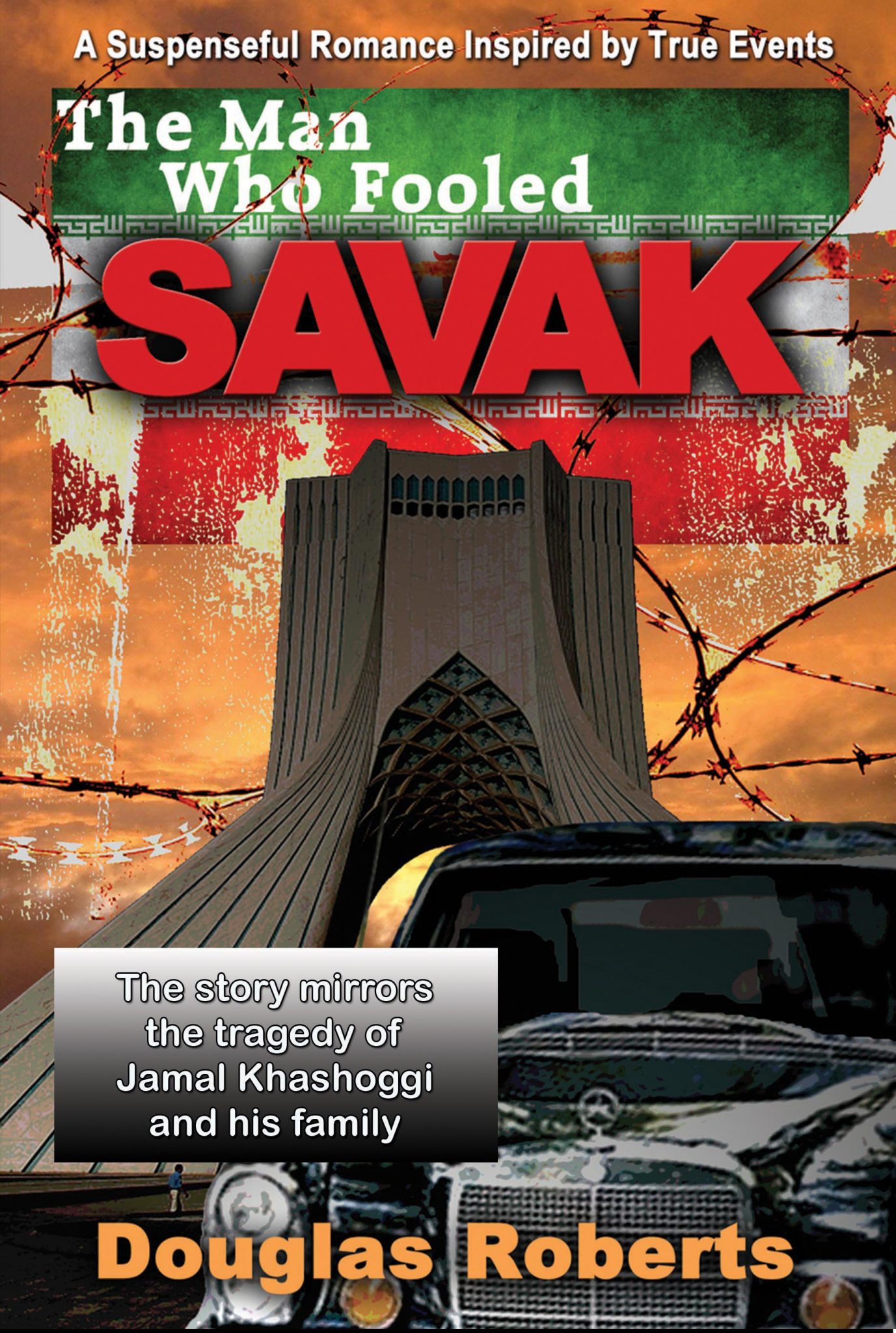
Douglas Roberts was stationed in Tehran, Iran in 1971 working in a US classified message center and experiencing the brutal oppressive dictatorship of the Shaw of Iran first hand. The Man Who Fooled SAVAK inspired by true events in the early 1970s, captures what it is like to live in a dictatorship with secret police monitoring your every move. “The book is as relevant today with the current events in the Middle East as if it were written in the 1970s,” said Anthony S. Policastro, publisher of Outer Banks Publishing Group. “It is rare that a book comes along and reminds us of the some of the basic freedoms and human rights we take for granted living in a Democracy,” Mr. Policastro added. The story is about a G.I. stationed in Tehran during the Vietnam War, who falls in love with an Iranian girl and who later launches an elaborate plan to get her and her mother out of the country. They hope to reunite with their father and husband who escaped death from the Shah’s secret police, SAVAK, ten years earlier.
By Douglas Roberts
As an author I am aware of how time and events can change the filter through which we process our stories. This happened to me with my book The Man Who Fooled SAVAK. Until recently, I saw the main narrative of my story as centering around an Iranian family’s search for their father, living in exile. Fearing for his life, the husband could not return to Iran. And the family was not allowed to leave the country to join him.
With Donald Trump as President of the United States, I started to see a new disturbing context. The narrative was now about the trials and tribulations of a separated family, separated by the Iranian government. Every time I would read the current news about children in detention centers, separated from their parents, a feeling of discomfort would come over me that was all too familiar. Then it hit me. My book was not really about Iranian family members not being able to leave their homeland. That was just the hurdle they faced.
The anguish and trauma of any family being forced into separation by their government is not just a callous violation of human rights. The psychological and emotion strain it causes is immense. It was quite a revelation to suddenly have that realization about my own novel.
Living in Tehran, Iran in 1971 working in a classified message center created situations that caused me to lose my innocence about how a country, who was our ally at the time, dealt with abuse of freedoms that people in the U.S. took for granted.
In America, freedom of the press was something most Americans considered almost sacred, and to violate it was unthinkable. Imagine my shock when I learned that the Shah of Iran in 1971 decided he did not like what was written about him in the western media and had all offending periodicals quietly removed from newsstands. I knew about this because of my job in the classified message center. This was not public information.
In my mind the issues involved did not seem that controversial. The Shah was throwing lavish parties in celebration of the nation’s 2,500 anniversary. The criticisms were that the celebrations were too lavish.
But that shock did not compare to the one I got later that afternoon, when I got home from work and telephoned my girlfriend Fari. She blew up at me. I was never to talk about such things over the phone! Someone could be listening. As I would eventually discover, someone probably was.
Was this how such a close ally of the United States behaved? Apparently so!
Fast forward to today. Our President gleefully talks about body slamming journalists, and how the press is the enemy of the people. When I read that 44 percent of Republicans recently polled said Trump should have the autocrat’s power to shut down news shows and how successful his efforts have already been. Every time I hear the press being trashed, which is regularly now, my mind flashes back to the crisis mode it put U.S. military personnel in when the Shah had articles critical of him removed. It sends a chill up my spine.
Perhaps my biggest loss of innocence was the discovery that the Shah of Iran tortured his prisoners. It was a seemingly mundane message issued by the State Department to Iran complaining about the name given to a high-tech torture device developed in Israel called the Apollo, the same name as our space program at the time. The device was designed to administer electric shocks, including shocks to the head via a metal hood. I was disturbed that the complaint only focused on the name of the device and not the torture itself. I cringed at the thought that a supposedly trusted ally of the United States would resort to such inhumane treatment of people.

Azadi Square, Tehran, Iran
More disturbing than learning about the Apollo, is the acceptance of torture by recent administrations here in America. The war on terror uncovered scandals of secret CIA prisons where prisoners suffered the brutal tactics of interrogation and horrible mental health problems that haunt the men subjected to torture.
The whole conversation about torture changed for the better, recently. Former President Obama banned the use of waterboarding as an interrogation technique in 2009. That ban was later codified in law by Congress.
But today, Trump champions the benefits of the recently banned method of waterboarding, even though none of his staff believes in its effectiveness.
A larger concern of mine is that Trump believes that Iran is the enemy and has dismantled the diplomatic effects of the so-called Iran Deal. But it’s more than that. Trump remembers that in 1953, the CIA overthrew and replaced the newly elected Prime Minister of Iran, Mohammad Mosaddegh. Unduly influenced by Benjamin Netanyahu he believes he could repeat a regime change in Iran. But we live in a different world now. Any attempt at regime change in Iran, would be catastrophic and would result in the balkanization of Iran. Iran would turn into another Iraq or Syria.
As far as my book is concerned, my hope is that anyone who reads it will realize that while we have issues with the current regime, the Iranian people are not our enemy. The late Anthony Bourdain used to crow about the most friendly and hospitable people he’d ever met were from Iran. Having once lived there, that was no news to me. I hope the reader gets a sense of that.
Nothing is what it seems, in this new, exciting Koos Verkaik novel – Heavenly Vision, undoubtedly one of his masterpieces!
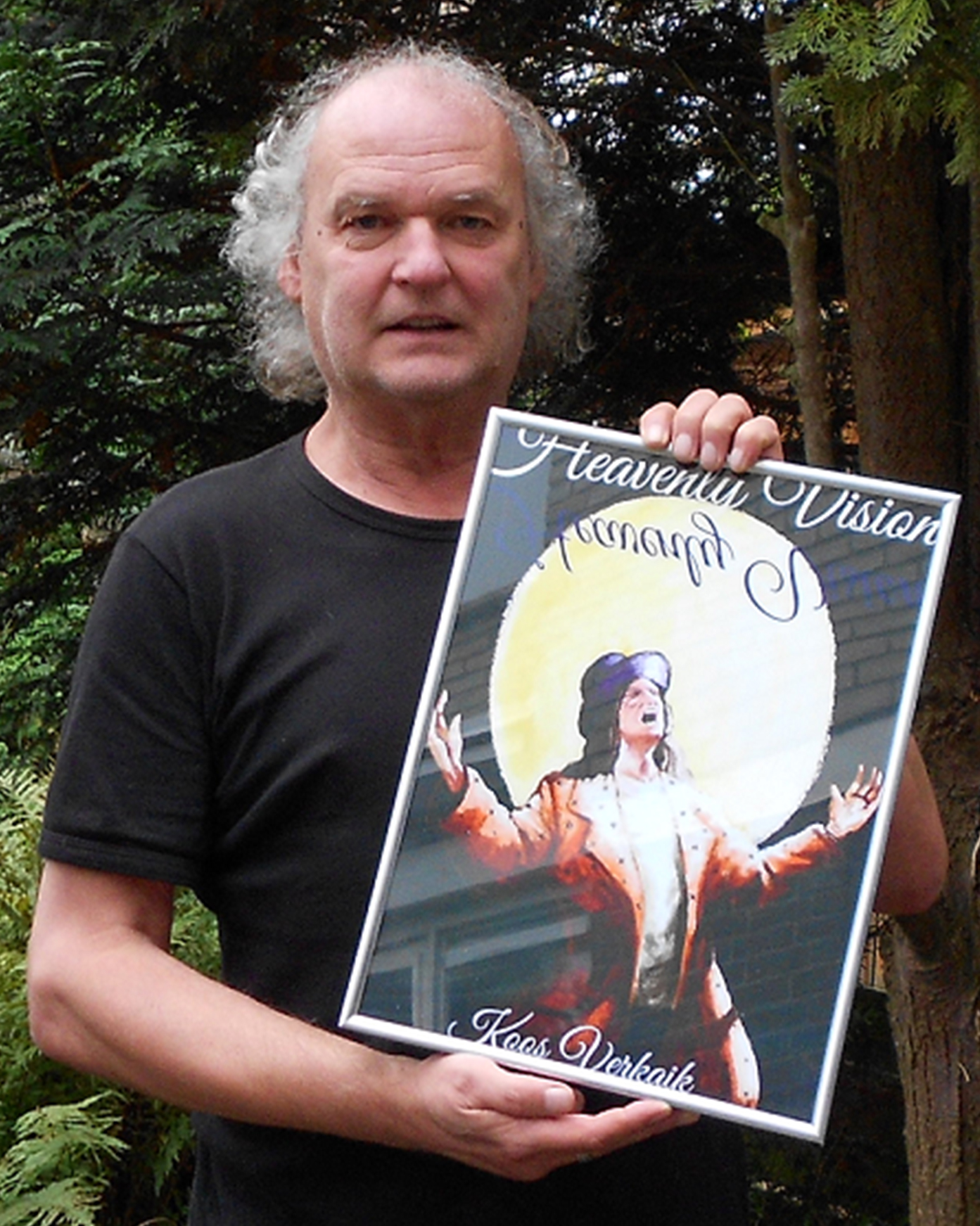
A book collector of limited means comes across a 1745 Atlas of the Cape of Good Hope in a second-hand bookshop in Amsterdam. Once his historian friend examines the manuscript found inside, he becomes very excited and life for Jan Glas is never the same again.
A book collector of limited means comes across a 1745 Atlas of the Cape of Good Hope in a second-hand bookshop in Amsterdam. Once his historian friend examines the manuscript found inside, he becomes very excited and life for Jan Glas is never the same again.
By Sheri A. Wilkinson 5.0 out of 5 stars Fantastic! September 19, 2018
In 1745 an old manuscript is found in an old atlas of Cape of Good hope. Captain Adriaen Kalf tries to figure out its meaning. In current time, a man from Amsterdam Jan Glas learns of a machine that could end the world. He embarks on a journey to England and the USA to learn more about this. He meets a man in the United States from The Center of The Heavenly Vision, who claims that this machine is real and will indeed will kill people. Jan encounters some strange people and events, could this manuscript from the past be connected to this killing machine? Does this machine exist? And is this “prophecy” going to come true? A cast of likable, unlikable and quirky characters, along with a very original and interesting story makes for a fantastic read. I liked the writing style, going back to the past and present, and the characters, all unique in their own way. I recommend Heavenly Vision to those who like adventure , drama and excitement. I also recommend The Nibelung Gold also by Koos Verkaik.
By Sandra K. Stiles 4.0 out of 5 stars Very Interesting September 19, 2018
If you like books that bounce back and forth between the past 1700s, and the present then this is the book for you. It makes it a little confusing, but if you are willing to hang in there it all becomes clear in the end. In the past we have an old manuscript, in the present we have a machine that is said to be able to end the world. What are the connections if any between these two? The author has taken these two events and woven them into a story that will have you reading cover to cover just to find that connections. Once again this author has created a book that grabs you and forces you to read to find the answer to all of those questions you had at the beginning. I applaud him for this ability. I received a copy to facilitate my review. The opinions expressed here are my own.
Reviewed by Steven Felicelli
According to Ron Rhody’s wife, he is not eligible for authoring a memoir. He hasn’t won an Oscar or an MVP or a Nobel prize. And yet Rhody has a story he wants, needs, to tell. His story. And so that’s how he will tell it to us: as one of Our Own Little Fictions.
Reminiscent of Sarah Polley’s documentary Stories We Tell, Rhody meanders through his memory and down the real roads he’s traveled all over the U.S., from his beloved Frankfort, Kentucky, to California and back (via Florida and Alabama) and then back out to California. Along this circuitous route through his youth, manhood, and ancestry, we encounter all sorts of colorful characters, historical events, family triumphs, and tragedies, which in large part amount to the man whose story we’re being told.
The place closest to Rhody’s heart is clearly Frankfort, Kentucky. It is there his father, a newspaperman, fought for civil rights and to put down roots for his forward-thinking family. Though a wanderlust would uproot the Rhodys and send them all over the U.S., Kentucky kept calling them back to the heart of the heart of their country. In Our Own Little Fictions, Frankfort is origin and refuge, and it serves as the Ithaca of the author’s Odyssey.These chronicles of Rhody contain all the joy and pain of an American life that spans the Cold War to the present.
We meet his parents, grandparents, wife and children, friends and mentors. From animated anecdotes of a hard-nosed football coach doling out life lessons to the memorial for a dear friend and author of “sixteen erudite books,” we witness a life pass in time-lapse frames of laconic, Hemingwayesque prose.
Hemingway and his suicide haunt the narrative beginning to end. On a road trip from California to Kentucky, Rhody and his son make a scheduled detour to Hemingway’s home in Idaho (where he’d put the shotgun in his mouth).
”It seemed wrong that Hemingway had killed himself. Nature should have gotten him. Or chance.”
Later in the narrative and earlier in time, news of Hemingway’s suicide reaches Rhody, and he reflects on the premature tragedy, as well as his own (missed?) calling. These two time periods intermingle, and Rhody leaves Idaho with “an answer to a question I hadn’t known I’d asked.” Authorship was an alternative path he’d bypassed only to embark upon late in life.
Later in the narrative and earlier in time, news of Hemingway’s suicide reaches Rhody, and he reflects on the premature tragedy, as well as his own (missed?) calling. These two time periods intermingle, and Rhody leaves Idaho with “an answer to a question I hadn’t known I’d asked.” Authorship was an alternative path he’d bypassed only to embark upon late in life.
Late in life, indeed. The long road approaches its end and the loss of loved ones is an inevitability. Each story has the same conclusion, alas, and many of the characters we encounter in this Appalachian saga pass on in heartrending deathbed scenes and austere funerals. The depiction of these tragedies is sentimental, even cliched, but anything less/more would not be true to life. It is the commonality of these cliches that arise in endless variations, like updates of Shakespeare.
No, Ron Rhody is no Prince Hamlet, nor was he meant to be, but his story of “becoming,” with its conduplicatio, terse punch-lines, and homespun wisdom, is one that will always be in need of telling and retelling.
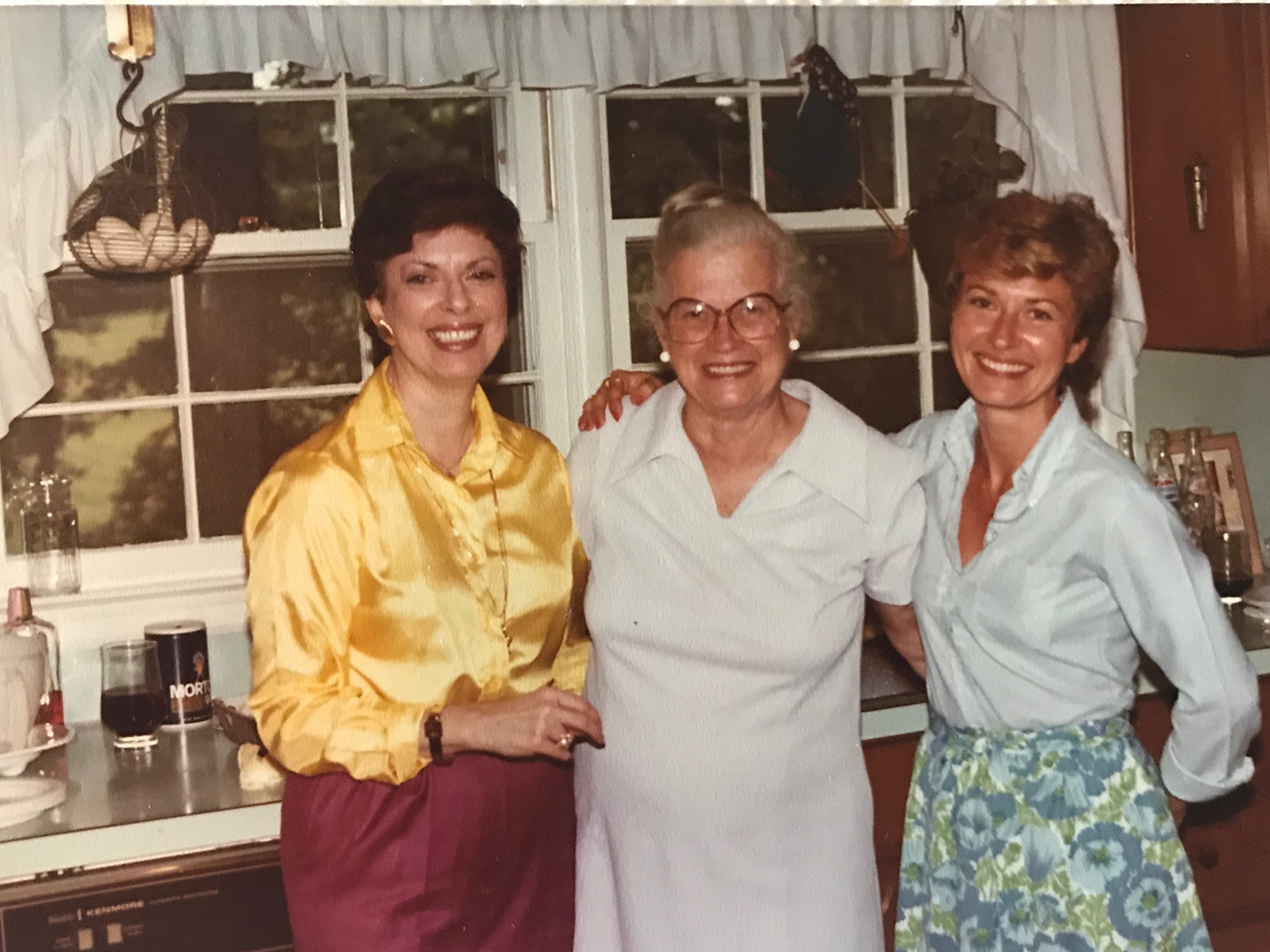
The feature photo above from left, Ron Rhody’s sister, Ann, his mother and sister, Mary Lou.
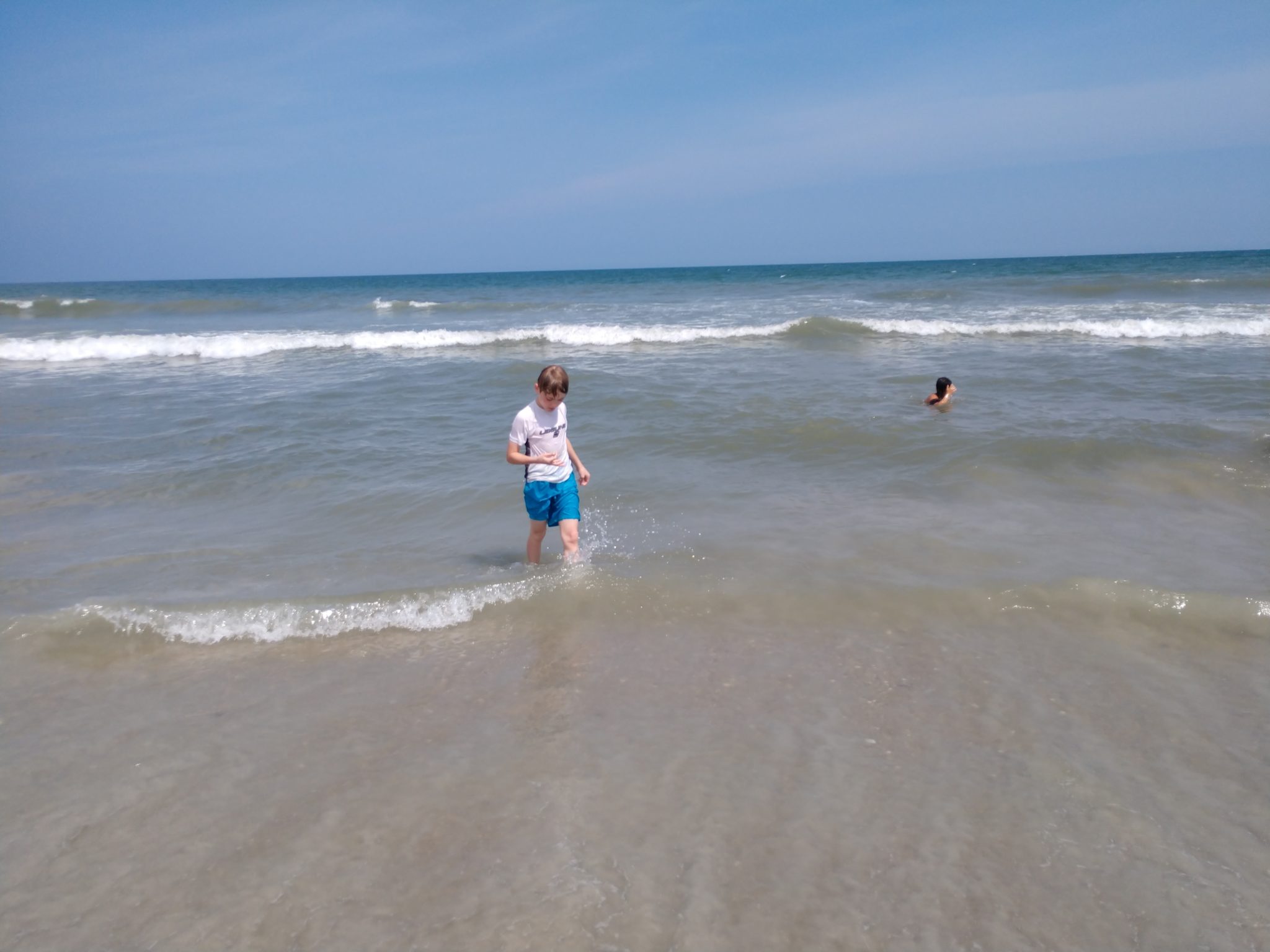
Be aware of rip currents this Labor Day Weekend. If in doubt, ask a lifeguard.

By Ron Rhody
I’ve a new book coming. I’m uneasy with it. I’ve never before written anything this personal knowing it will be public.
But I wanted to get the slice of time this book is about, and the place at its center, and the people who figure in it, on the record in the way only a book can do.
Our Own Little Fictions So, I have done it. It’s an unconventional book. There is no obvious story line. There is one, but the reader will have to pay attention to uncover it. And the story jumps around in time — the way memories do. Again, the reader will have to pay attention. And the people who figure in it are presented mostly in cameo, but with enough portrayal to allow the reader to imagine them. And I’m asking the reader to pretend they are listening. Not reading. Listening.
Hopefully the writing will make that easy. This is asking a lot of the reader. But the book is novella size and won’t take a lot of time to get through. There is that. Watch for it.
Our Own Little Fictions Available November 1. List Price: $14.99 5.5″ x 8.5″ (13.97 x 21.59 cm) Black & White on White paper 86 pages Outer Banks Publishing Group ISBN-13: 978-1732045217 ISBN-10: 1732045216 BISAC: Biography & Autobiography / General
Read the stunning review by the San Francisco Book Review.
Ron Rhody is one of our bestselling authors having published 8 books in both non-fiction and fiction. Our Own Little Fictions is his fourth non-fiction book.
Visit his blog to learn more or read one of our posts below.
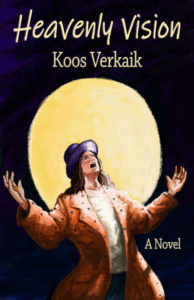
Koos Verkaik’s newest novel Heavenly Vision is about a book collector who finds a manuscript in a 1745 Atlas of the Cape of Good Horn that changes his life forever. Read the interview by Deborah Kalb on how Koos was inspired to write the murder mystery, Heavenly Vision.
Q: How did you come up with the idea for Heavenly Vision?
A: For most of my books all I need is one simple fact. One line, one thought, will do to get me start writing. Where Heavenly Vision is concerned, I was intrigued by the fact that you can buy yourself an old book at a flea market and find a priceless drawing or etching between the yellowed pages! That stimulates my fantasy and I get cracking right away – not knowing at all where and when it will end.
I always start to write the first two or three pages with a simple pen on sheets of paper. Only after I know it is all right, I start working on a computer.
Sitting down in silence and write the lines with a pen is something I will always enjoy.
Q: The book takes place in a variety of locations and times. Did you write the novel in the order in which it appears, or did you move chapters around as you wrote?
A: I wrote it in the order in which it appears! When I start writing, there is a complete chaos in my head, but the manuscript must be one hundred percent all right. I make notes on sheets of papers, on beermats, on three different laptops, sometimes on the back of my hand – but finally it all comes together in the manuscript.
After having typed “The End,” the chaos has disappeared. The work is done. Then I take a deep breath… and start working on the next project.
Q: Did you know how the book would end before you started writing it?
A: I never know how my books will end. I know there are authors who make a storyboard, who only start writing after they have figured it all out.
For me every new book is an adventure – for myself and for my readers. The story grows and to be honest; I do know where to go with my stories, it is all somewhere in my head and it has to come out. I never had writer’s block; I have written since I was 7 years old and as a boy I worked at night and saw the sun come up.
Q: How did you research the novel, and did you learn anything surprising?
A: Research is always important. And… the internet is there for the common facts, books are there for the real information. In my work room I am surrounded by a couple of thousand books; I absorb the facts and write fantasy.
Right now I am reading Sapiens and Homo Deus from Yuval Noah Harari. Such a great writer about the history and the future of mankind.
For Heavenly Vision I didn’t have to do much research. Most of the things I wrote about (such as the Dutch East India Company) were already known to me. I am a collector of nonfiction books about science, but also about alchemy, the supernatural, mysterious historical facts, etc. Life is full of odd surprises and I love to write about it.
Q: What are you working on now?
A: I always write different books at the same time. There are two series of children’s books, Saladin the Wonder Horse and Alex and the Wolpertinger. Finished the last book of Saladin and work on book 14 of The Wolpertinger; intending to write over 30 different titles.
A new publishing company contracted me for all my novels: Righter’s Mill Press, Princeton. They also have a film company, Three Corners Entertainment. Signed contracts for all titles.
Right now I also started a new novel. And I never tell about a new story until it is finished… When I explain all about it, I feel less urge to complete it.
Q: Anything else we should know?
A: Yes. Heavenly Vision was published earlier by a Canadian company. Unfortunately the publisher passed away. We had become such good friends, She was such a great person.
Now Outer Banks Publishing Group has taken over; they will also publish my novel The Nibelung Gold soon and they already published the two series of children’s books I mentioned above.
I received wonderful reviews for the first edition of Heavenly Vision, which made me very proud (believe me, it is a great adventure and also a great honor to be published in Canada and the USA when you are a writer from faraway Holland).
About Koos Verkaik
Koos Verkaik, who lives outside of Rotterdam, Holland, is the author of more than 60 books from children’s series to mysteries to sci-fi. When his novels, All-Father and Wolf Tears were published, he earned the moniker as the Dutch Stephen King.
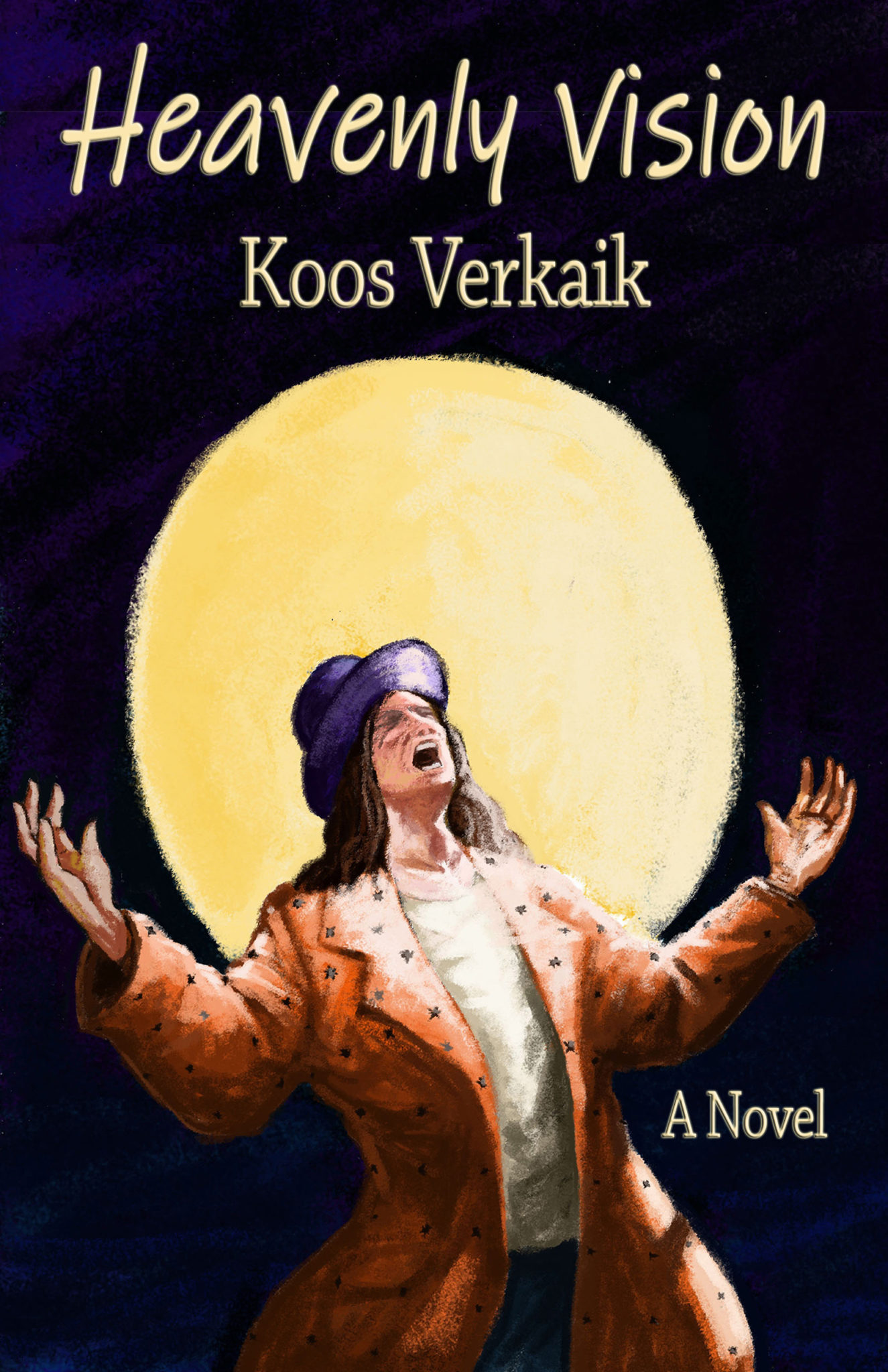
About the cover of Heavenly Vision
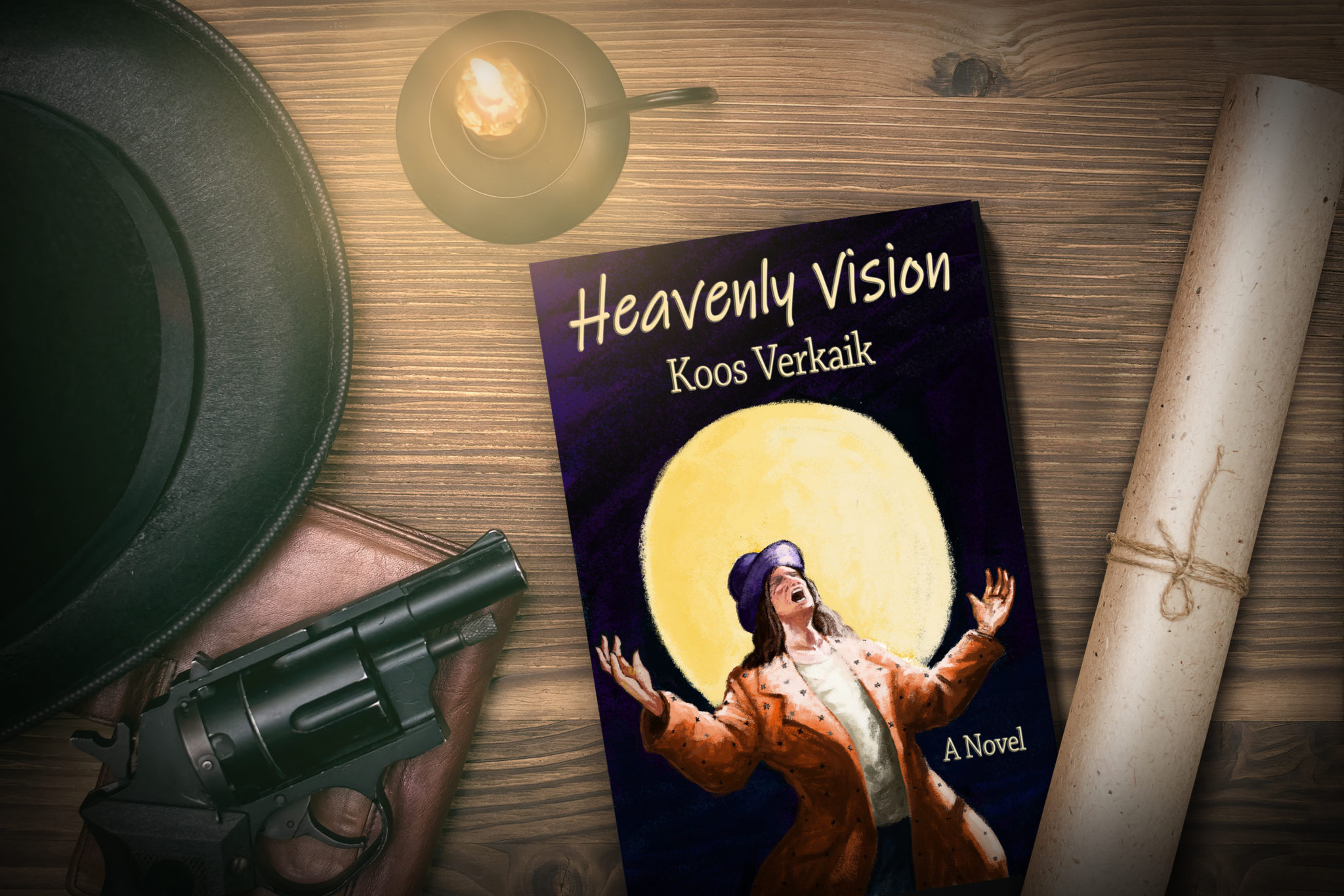
The cover was commissioned and created by Doriano Strologo, an illustrator in Numana, Italy, depicting the main character in the book, the mysterious Raso, the man who had the heavenly vision.
Nothing is what it seems, in this new, exciting Koos Verkaik novel – Heavenly Vision, undoubtedly one of his masterpieces!
A book collector of limited means comes across a 1745 Atlas of the Cape of Good Hope in a second-hand bookshop in Amsterdam. Once his historian friend examines the manuscript found inside, he becomes very excited and life for Jan Glas is never the same again.
“Allart Vroom climbed down from the ship, and we stood ready to catch him,” wrote Captain Adriaen Kalf. “His clothes, his flesh, his bones pulverized in our hands. He formed a small heap of powder at our feet. Please, believe me—it is not, like someone suggested, the contents of broken hourglasses.”
Glas, an Amsterdam publicist, later reads about a machine that could cause the end of the world! Of course, he wants to find the truth about the machine and the remarkable manuscript!
His curiosity takes him takes him to England and the USA. In Florida, a peculiar man crosses his path – Wesley Dunn, a Raso Preacher at the Center of the Heavenly Vision in Franks Knight, Florida.
This man says that the world will be destroyed by “The Machine of Colton”, which is also mentioned in the manuscript that Jan found in the atlas! Only a few people will survive – the true followers of the odd Mr. Wesley Dunn, and those who follow the Raso way of life!
Murder, mystery and intrigue will keep the reader guessing as to what is going on. Is the world coming to an end, and if so, who will survive?
To learn more about Heavenly Vision and Koos Verkaik read his latest interview with Deborah Kalb, Book Q&As with Deborah Kalb.
A cast of likable, unlikable and quirky characters, along with a very original and interesting story makes for a fantastic read. I liked the writing style, going back to the past and present, and the characters, all unique in their own way.
I recommend Heavenly Vision to those who like adventure , drama and excitement. I also recommend The Nibelung Gold also by Koos Verkaik.
By the end the author had impressed me so much that I was not sure whether to applaud the brilliance of the character in the story or the creator of that character that is the author. The twist or final pull was that good of a brilliance charm.
As usual Koos Verkaik brings a mélange of quirky characters to life. The good, the bad, but never the indifferent. He then weaves them into a mystical tale that moves between the present and the past of a strange machine that kills at will and a prophecy of doom. His unique writing style holds the reader’s interest from beginning to an end of the world scenario, as he builds the tension during a well plotted fantastical journey full of intrigue and mysteries.
This is another MUST for readers of strange and unique tales from the undisputed master with one of his whacky covers that I love…
If you like books that bounce back and forth between the past 1700s, and the present then this is the book for you. It makes it a little confusing, but if you are willing to hang in there it all becomes clear in the end. In the past we have an old manuscript, in the present we have a machine that is said to be able to end the world. What are the connections if any between these two? The author has taken these two events and woven them into a story that will have you reading cover to cover just to find that connections. Once again this author has created a book that grabs you and forces you to read to find the answer to all of those questions you had at the beginning. I applaud him for this ability.
Koos Verkaik was born in Holland, near Rotterdam. He worked as a copywriter for a short time. His first comics (three pages each week) were published in the magazine Sjors when he was only 16 years old. He wrote his first novel (sci-fi) in a weekend at the age of 18 and it was published immediately. During his long career as a novelist and author, he wrote hundreds of comic scripts and published over 60 books, both children’s books and urban fantasy novels. Koos writes (novels) every day and has translated books from English and German into Dutch.

If you vote for Trump and his MAGA GOP members you may indirectly start World War III.
If Trump and his MAGA GOP take control of our Congress, they will cut off support for Ukraine. They already cut support on the advice of Trump when the Congress was ready to approve the spending bill with support for Ukraine.
What will happen next?
said Larry Jacobs, director of the Center for the Study of Politics and Governance at the University of Minnesota. “This is supposed to be the party of conservative principles, of tradition, of respect for customs and rules that make society governable.
“The idea that the law does not apply to Republicans is something that has now become part of the mainstream of the Republican party. We see it in terms of the approach to elections. We see it in terms of the treatment of immigrants. Some of the actions with regard to abortion may approach that level. The Republican party appears to consider the law and the constitution to be optional and to have lost legitimacy.”
From The Guardian
Republicans’ lawless leaders at odds with midterm law and order message | Republicans | The Guardian
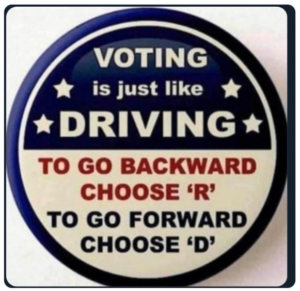
If you vote Republican you are supporting:
– 19 GOP red states have pending laws suppressing voter’s ability to vote. Historically, dictators and Fascists have suppressed votes to stay in power.
– The GOP has come out in support of QAnon, The Oath Keepers and the Proud Boys
– You may lose a loved one, a relative or a friend in a train crash, a bridge collapse or a plane crash as Republicans strip funds from President Biden’s infrastructure bill.
– The Texas abortion ban if left to stand will be passed in several other GOP states. Idaho will pass an anti-abortion law based on the Texas law. 16 states have “trigger” abortion ban laws.
by the US Supreme Court.
https://cnn.it/3RaW1zm
https://nyti.ms/3IcANNo
With the recent Supreme Court banning EPA authority from polluters
https://bit.ly/3IfQ1Bf
on Gun Purchases – will never get passed.
Watch Jimmy Kimmel’s emotional plea to improve gun purchase background checks
https://cnn.it/3AnRweO
– will never go up leaving 18 states still paying $7.25 an hour.
– the last thing America needs are conservative leaders, especially some Republicans who want to keep America from progressing. The last thing America needs is backward-thinking leaders in the 21st Century.
– Republicans have turned to cheating to stay in power or to get back into power…and nothing is getting done by them for the American people.
The enforcement or advocacy of strict obedience to authority at the expense of personal freedom.
and everything America stands for: Truth, Justice and Liberty for all? Look what is happening in Ukraine.
*Of course, not all Republicans are like those described above. Here is a list of those who should stay in office.
House of Representatives – those who voted to impeach the former president
Senate – The Republicans who voted to convict the former president after impeachment:
YOUR VOTE COUNTS. It’s a lie to think otherwise.
Paid for by Jake Stone for American Democracy
VOTE like your freedom depended on it…because it does.

 Books of the NY Times