
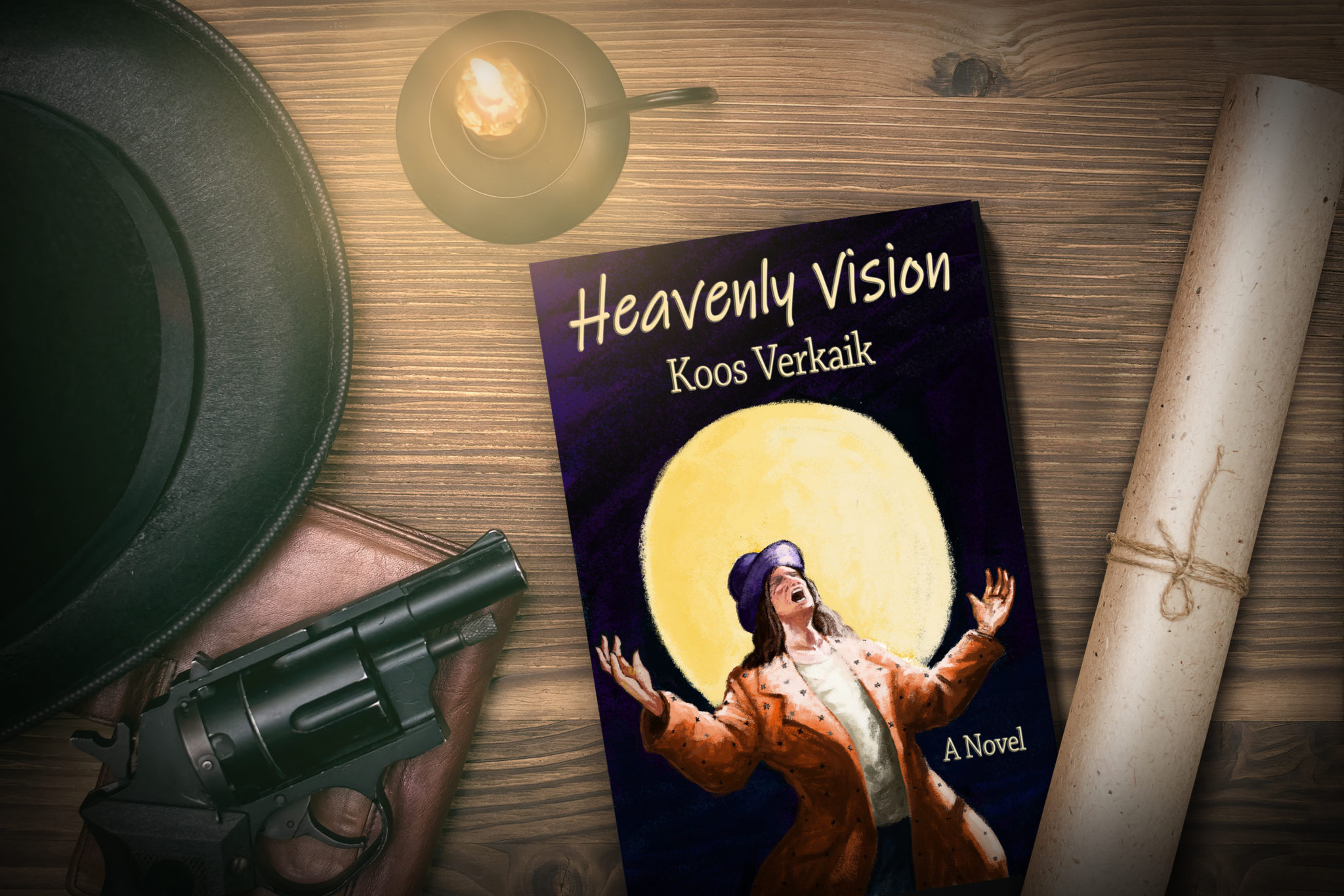
Knightmst
5.0 out of 5 stars
An Intriguing and complex “jigsaw” puzzle of a read.
December 24, 2018
Religious cults have been part of our world for ages if not just thru stories, but actual cults that can be found throughout this world. They have filled the void for those who felt lost and needed a sense of belonging. They have filled the void for their leaders who wish to corrupt a religion to get people to their bidding. There are of course numerous reasons why people both join, and start a cult and would be a story upon itself.
I bring up religious cults as they will become part of the story of Author Koos Verkaik’s aptly titled book Heavenly Visionxs. A book that will find a reader facing different time periods as a story unwinds thru the words with in the pages of this book. The book will introduce the reader to a wide range of characters, and even a range of time periods.
The book starts interesting enough in the year 1745 and will introduce the readers to ship captain Adriaen Kalf. The Captain will have the most unfortunate events that will cause the man to see formal charges filed against him. The events that lead to his charges will be found spelled out in an old Atlas that falls into the hands of one Jan Glas.
As we continue to read the book, we find out that Captain Kalf had taken on a very unique device that time has nearly forgotten about. I write nearly, as Glas will be involved in helping an article get written about Kalf and it leads to an invitation to a symposium held by a publishing company. The company, Arnold McKay Publishing, is being the magazine ParaPsycho. It is during the symposium that many of the other key characters in the book will come into the picture. There is Pamela Mitchell from the magazine, a Hellen Derringer from a group called the Third Eye Association, and the beautiful Mary Landock.
The events in, Heavenly Vision, will start growing more and more intriguing during this event. Mary has her purse stolen that leads to a chase, police involvement and so much more. These events will eventually lead to Jan Glas, in England waking up in a Hospital. There is much that is being left out on purpose as one must really get to read how this all happens as it is exciting and very intriguing.
The book will lead you back in time a few more times as you read the pages. One of the more interesting, trips to the past, will involve the introduction to Manuel Raso back in the late 1880’s in several southern US States. Our introduction to him will tell the tale of his unique gift that potentially came from a kick to the head by a horse. A gift that will leave many in tears, but grateful for meeting the man. A gift that will find him gaining a “cult” like following and eventually a formation of a town in Florida.
All of these past events will somehow find themselves tying back to Jan Glas, ParaPsycho and Arnold McKay. They will also go back to that secret cargo that Captain Kalf had upon his ship. All of these pieces are tied together much like a jigsaw puzzle being completed. The rush of finding a place for each piece, and that feeling of nearing completion will be felt as you read what Author Koos Verkaik has laid out within the pages.
I do realize some people do not like stories that seem to jump around from one period to another. I however found this to be a great tool within the story and added so much to this book. There was just the right amount of changes that it did not take away from the overall enjoyment of the story. In truth, it only added to the complete puzzle as things are unveiled as you reach the finale of the book. Those who enjoy mysteries, suspense and intrigue will surely enjoy this book by Koos Verkaik.
Sheri A. Wilkinson
5.0 out of 5 stars
Fanastic!
September 19, 2018
In 1745 an old manuscript is found in an old atlas of Cape of Good hope. Captain Adriaen Kalf tries to figure out its meaning. In current time, a man from Amsterdam Jan Glas learns of a machine that could end the world. He embarks on a journey to England and the USA to learn more about this. He meets a man in the United States from The Center of The Heavenly Vision, who claims that this machine is real and will indeed will kill people.
Jan encounters some strange people and events, could this manuscript from the past be connected to this killing machine? Does this machine exist? And is this “prophecy” going to come true? A cast of likable, unlikable and quirky characters, along with a very original and interesting story makes for a fantastic read.
I liked the writing style, going back to the past and present, and the characters, all unique in their own way. I recommend Heavenly Vision to those who like adventure , drama and excitement. I also recommend The Nibelung Gold also by Koos Verkaik.
Sandra K. Stiles
4.0 out of 5 stars
Very Interesting
September 19, 2018
If you like books that bounce back and forth between the past 1700s, and the present then this is the book for you. It makes it a little confusing, but if you are willing to hang in there it all becomes clear in the end. In the past we have an old manuscript, in the present we have a machine that is said to be able to end the world. What are the connections if any between these two? The author has taken these two events and woven them into a story that will have you reading cover to cover just to find that connections. Once again this author has created a book that grabs you and forces you to read to find the answer to all of those questions you had at the beginning. I applaud him for this ability.
I received a copy to facilitate my review. The opinions expressed here are my own.
R M
5.0 out of 5 stars
Intriguing
January 12, 2019
Heavenly Vision by Koos Verkaik was a very intriguing read right from the start. The way the many characters and situations flow in and out like a giant puzzle throughout keep the reader interested. The end of course was satisfyingly brilliant as all the ties connect. I don’t like to give away spoilers but I will say between the haunting document of 1745, a paranormal preacher of a strange cult and good old fashioned modern revenge make for a book I could not put down…. LDM
Thomas H Redlin
5.0 out of 5 stars
Hats off to Koos Verkaik!
January 6, 2019
Five stars for this book and a big hurray for the author! Yes, indeed, nothing is what it seems, in this new, exciting Koos Verkaik novel… It starts with the finding of an old manuscript hidden in an old atlas of the Cape of Good Hope, around the year 1745.
“Allart Vroom climbed down from the ship, and we stood ready to catch him,” wrote Captain Adriaen Kalf. “His clothes, his flesh, his bones pulverized in our hands. He formed a small heap of powder at our feet. Please, believe me—it is not, like someone suggested, the contents of broken hourglasses.”
Jan Glas, an Amsterdam publicist, reads about a machine that could cause the end of the entire world! Of course, he wants to find out the truth about the remarkable manuscript! A long journey takes him to England and the USA.
A peculiar man crosses his path – Wesley Dunn, Raso Preacher, Center of the Heavenly Vision, Franks Knight, Florida, USA. This man says that the world will be destroyed by ‘the Machine of Colton’, which is also mentioned in the manuscript that Jan found! Only a few people will survive – the true followers of the odd Mr. Wesley Dunn, and the Raso way of life!
Murder, mystery and intrigue will keep the reader guessing as to what is going on. Is the world coming to an end, and if so, who will survive?
This is a thriller that keeps you wondering how the author managed to come up with so many ideas, this is almost insane. Hats off to Koos Verkaik!
Available at our bookstore and on Amazon.com as well as fine bookstores everywhere.
WHEREVER THE TIDE OF LIFE TAKES YOU AND YOUR LOVED ONES
The Origin of New Year’s Day
From the History Channel
The first New Year’s Day was celebrated on January 1 in the year 45 B.C. for the first time in history as the Julian calendar took effect.
Soon after becoming Roman dictator, Julius Caesar decided that the traditional Roman calendar was in dire need of reform.
Introduced around the seventh century B.C., the Roman calendar attempted to follow the lunar cycle but frequently fell out of phase with the seasons and had to be corrected. In addition, the pontifices, the Roman body charged with overseeing the calendar, often abused its authority by adding days to extend political terms or interfere with elections.
In designing his new calendar, Caesar enlisted the aid of Sosigenes, an Alexandrian astronomer, who advised him to do away with the lunar cycle entirely and follow the solar year, as did the Egyptians.
The year was calculated to be 365 and 1/4 days, and Caesar added 67 days to 45 B.C., making 46 B.C. begin on January 1, rather than in March. He also decreed that every four years a day be added to February, thus theoretically keeping his calendar from falling out of step.
Shortly before his assassination in 44 B.C., he changed the name of the month Quintilis to Julius (July) after himself. Later, the month of Sextilis was renamed Augustus (August) after his successor.
Celebration of New Year’s Day in January fell out of practice during the Middle Ages, and even those who strictly adhered to the Julian calendar did not observe the New Year exactly on January 1. The reason for the latter was that Caesar and Sosigenes failed to calculate the correct value for the solar year as 365.242199 days, not 365.25 days. Thus, an 11-minute-a-year error added seven days by the year 1000, and 10 days by the mid-15th century.
The Roman church became aware of this problem, and in the 1570s Pope Gregory XIII commissioned Jesuit astronomer Christopher Clavius to come up with a new calendar. In 1582, the Gregorian calendar was implemented, omitting 10 days for that year and establishing the new rule that only one of every four centennial years should be a leap year. Since then, people around the world have gathered en masse on January 1 to celebrate the precise arrival of the New Year.
While we can now communicate in the fastest, easiest and most convenient ways possible using a myriad of devices anywhere, anytime to anyone in any corner of the connected world, I believe we are losing our ability to communicate.
 |
| Jeff Bezos |
 |
| Andy Grove |

By Anthony S. Policastro, Publisher
While we can now communicate in the fastest, easiest and most convenient ways possible using a myriad of devices anywhere, anytime to anyone in any corner of the connected world, I believe we are losing our ability to communicate.
Because communication is now ubiquitous, convenient, easy and instant, we have taken our writing skills for granted. Take emails. I believe that most of us are so comfortable with communicating with this medium that we use it like we are conversing with a good friend. Facebook and Twitter reinforce this mindset because we know our posts and tweets are reaching friends and relatives.

Jeff Bezos
The result is a quantum disconnect fueled by snippets of information that are most times incomprehensible.
When you a sitting face to face and having a conversation, the context of what you are talking about is always top of mind. But when you converse in the same manner with email the recipient may not read email for hours or days. The context gets lost. Complicate that with several acronyms in the copy and you might as well call a cryptologist.
We tend to write emails as if the recipient is sitting across from us leaving out the content because we believe the recipient will know what we are writing about. We have become lazy writers.
And I’m not alone in my view.
Walter Chen in his blog, IDoneThis.com, wrote about Jeff Bezos, founder of Amazon who values writing over talking to such an extreme that in Amazon senior executive meetings, “before any conversation or discussion begins, everyone sits for 30 minutes in total silence, carefully reading six-page printed memos.”
Writing out full sentences enforces clear thinking, but more than that, it’s a compelling method to drive memo authors to write in a narrative structure that reinforces a distinctly Amazon way of thinking—its obsession with the customer. In every memo that could potentially address any issue in the company, the memo author must answer the question: “What’s in it for the customer, the company, and how does the answer to the question enable innovation on behalf of the customer?”
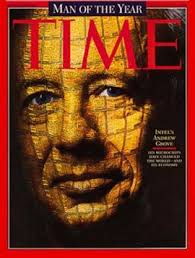
Andy Grove, legendary co-founder of Intel
Like Bezos, Andy Grove of Intel finds value in the process of writing, but he doesn’t consider reading important. Grove considers the process to force
yourself “to be more precise than [you] might be verbally”, creating “an archive of data” that can “help to validate ad hoc inputs” and to reflect with precision on your thought and approach.
Writing, according to Grove, is a “safety-net” for your thought process that you should always be doing to “catch … anything you may have missed.”
So what is the solution? Write more, write casually, but include all the pertinent facts and pretend your reader knows practically nothing about what you are writing about.
By Anthony S. Policastro, Publisher When writing a novel it is a bit like taking that award-winning photograph. Don’t worry, you don’t have to take great photographs to be a great novelist.
In today’s world with dozens of media channels bombarding us every minute of the day, your book has to stand out from all the noise.
Here are elements that should be included in your novel and help to make your book stand out. You can pick and choose a few or include all, but you should have at least one.
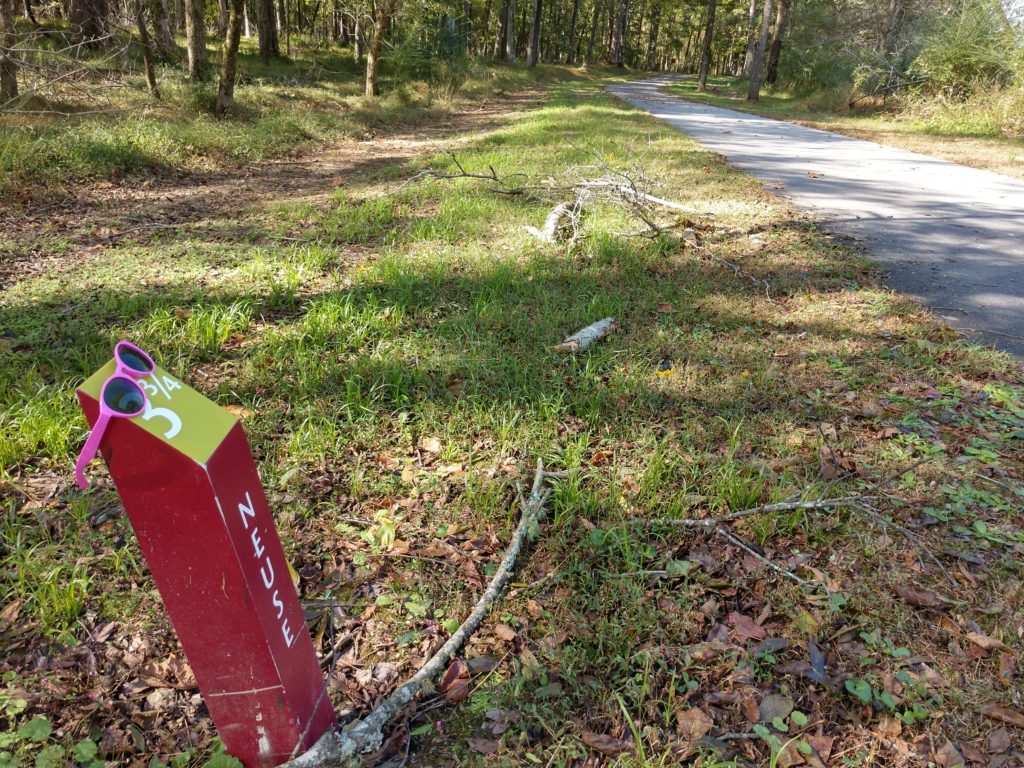
Now here is how writing is like photography. Look at the photo below. Pretend it’s your realty – what you perceive through your senses. Now write a story about that photograph. You would describe the scenery, the asphalt path, the fallen leaves and twigs…overall what you wrote is pretty boring and a nondescript story unless those elements play a part in your plot.

Neuse River Greenway trail, Raleigh, NC
If you look closely or view the scene from a different angle or perspective there is a better story there.  The story reveals itself upon a closer look – a nice person found the pink sunglasses on the trail and was considerate enough to place them on the milepost, hoping the person would pass this way again and find the sunglasses. Out of the reality emerges a story.
  The photographer views and analyzes the light, shadows, colors, shapes and how they play against each other and then picks an angle or position for the shot. Writing is the same. A good book is like taking a snapshot of reality, analyzing that realty, digging deeper until the hidden story is found in plain sight and then putting it to words. Tell us what you think. We would love to hear your thoughts.

Did you know Halloween’s origins date back to the ancient Celtic festival of Samhain (pronounced sow-in). The Celts, who lived 2,000 years ago in the area that is now Ireland, the United Kingdom and northern France, celebrated their new year on November 1.
This day marked the end of summer and the harvest and the beginning of the dark, cold winter, a time of year that was often associated with human death. Celts believed that on the night before the new year, the boundary between the worlds of the living and the dead became blurred. On the night of October 31 they celebrated Samhain, when it was believed that the ghosts of the dead returned to earth.
 In addition to causing trouble and damaging crops, Celts thought that the presence of the otherworldly spirits made it easier for the Druids, or Celtic priests, to make predictions about the future. For a people entirely dependent on the volatile natural world, these prophecies were an important source of comfort and direction during the long, dark winter.
To commemorate the event, Druids built huge sacred bonfires, where the people gathered to burn crops and animals as sacrifices to the Celtic deities. During the celebration, the Celts wore costumes, typically consisting of animal heads and skins to ward off ghosts.
In the eighth century, Pope Gregory III designated November 1 as a time to honor all saints; soon, All Saints Day incorporated some of the traditions of Samhain. The evening before was known as All Hallows Eve, and later Halloween. Over time, Halloween evolved into a day of activities like trick-or-treating, carving jack-o-lanterns, festive gatherings, donning costumes and eating sweet treats.
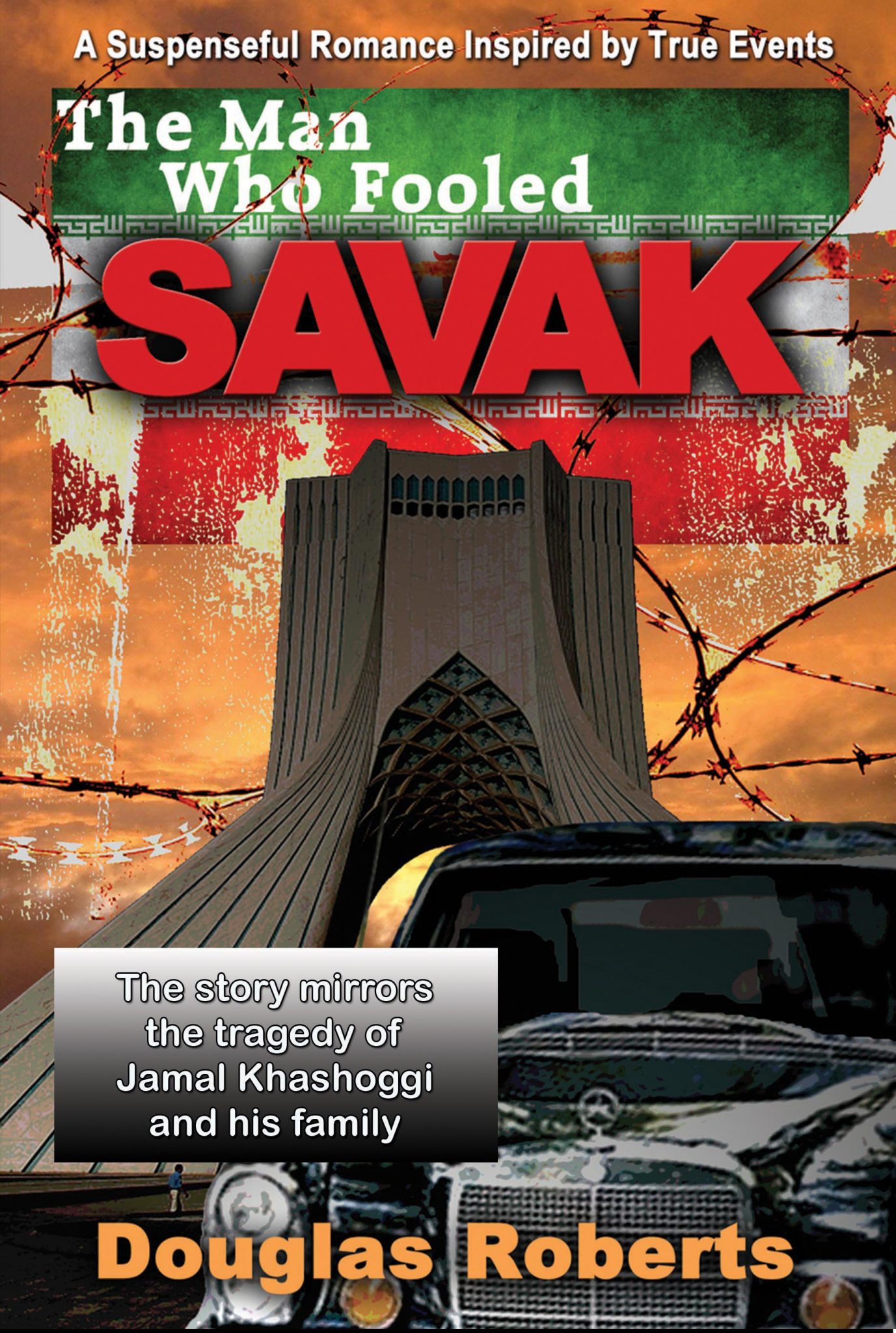
Note from the Publisher
Douglas Roberts was stationed in Tehran, Iran in 1971 working in a US classified message center and experiencing the brutal oppressive dictatorship of the Shaw of Iran first hand. The Man Who Fooled SAVAK inspired by true events in the early 1970s, captures what it is like to live in a dictatorship with secret police monitoring your every move. “The book is as relevant today with the current events in the Middle East as if it were written in the 1970s,” said Anthony S. Policastro, publisher of Outer Banks Publishing Group. “It is rare that a book comes along and reminds us of the some of the basic freedoms and human rights we take for granted living in a Democracy,” Mr. Policastro added. The story is about a G.I. stationed in Tehran during the Vietnam War, who falls in love with an Iranian girl and who later launches an elaborate plan to get her and her mother out of the country. They hope to reunite with their father and husband who escaped death from the Shah’s secret police, SAVAK, ten years earlier.
By Douglas Roberts
As an author I am aware of how time and events can change the filter through which we process our stories. This happened to me with my book The Man Who Fooled SAVAK. Until recently, I saw the main narrative of my story as centering around an Iranian family’s search for their father, living in exile. Fearing for his life, the husband could not return to Iran. And the family was not allowed to leave the country to join him.
With Donald Trump as President of the United States, I started to see a new disturbing context. The narrative was now about the trials and tribulations of a separated family, separated by the Iranian government. Every time I would read the current news about children in detention centers, separated from their parents, a feeling of discomfort would come over me that was all too familiar. Then it hit me. My book was not really about Iranian family members not being able to leave their homeland. That was just the hurdle they faced.
The anguish and trauma of any family being forced into separation by their government is not just a callous violation of human rights. The psychological and emotion strain it causes is immense. It was quite a revelation to suddenly have that realization about my own novel.
Living in Tehran, Iran in 1971 working in a classified message center created situations that caused me to lose my innocence about how a country, who was our ally at the time, dealt with abuse of freedoms that people in the U.S. took for granted.
In America, freedom of the press was something most Americans considered almost sacred, and to violate it was unthinkable. Imagine my shock when I learned that the Shah of Iran in 1971 decided he did not like what was written about him in the western media and had all offending periodicals quietly removed from newsstands. I knew about this because of my job in the classified message center. This was not public information.
In my mind the issues involved did not seem that controversial. The Shah was throwing lavish parties in celebration of the nation’s 2,500 anniversary. The criticisms were that the celebrations were too lavish.
But that shock did not compare to the one I got later that afternoon, when I got home from work and telephoned my girlfriend Fari. She blew up at me. I was never to talk about such things over the phone! Someone could be listening. As I would eventually discover, someone probably was.
Was this how such a close ally of the United States behaved? Apparently so!
Fast forward to today. Our President gleefully talks about body slamming journalists, and how the press is the enemy of the people. When I read that 44 percent of Republicans recently polled said Trump should have the autocrat’s power to shut down news shows and how successful his efforts have already been. Every time I hear the press being trashed, which is regularly now, my mind flashes back to the crisis mode it put U.S. military personnel in when the Shah had articles critical of him removed. It sends a chill up my spine.
Perhaps my biggest loss of innocence was the discovery that the Shah of Iran tortured his prisoners. It was a seemingly mundane message issued by the State Department to Iran complaining about the name given to a high-tech torture device developed in Israel called the Apollo, the same name as our space program at the time. The device was designed to administer electric shocks, including shocks to the head via a metal hood. I was disturbed that the complaint only focused on the name of the device and not the torture itself. I cringed at the thought that a supposedly trusted ally of the United States would resort to such inhumane treatment of people.

Azadi Square, Tehran, Iran
More disturbing than learning about the Apollo, is the acceptance of torture by recent administrations here in America. The war on terror uncovered scandals of secret CIA prisons where prisoners suffered the brutal tactics of interrogation and horrible mental health problems that haunt the men subjected to torture.
The whole conversation about torture changed for the better, recently. Former President Obama banned the use of waterboarding as an interrogation technique in 2009. That ban was later codified in law by Congress.
But today, Trump champions the benefits of the recently banned method of waterboarding, even though none of his staff believes in its effectiveness.
A larger concern of mine is that Trump believes that Iran is the enemy and has dismantled the diplomatic effects of the so-called Iran Deal. But it’s more than that. Trump remembers that in 1953, the CIA overthrew and replaced the newly elected Prime Minister of Iran, Mohammad Mosaddegh. Unduly influenced by Benjamin Netanyahu he believes he could repeat a regime change in Iran. But we live in a different world now. Any attempt at regime change in Iran, would be catastrophic and would result in the balkanization of Iran. Iran would turn into another Iraq or Syria.
As far as my book is concerned, my hope is that anyone who reads it will realize that while we have issues with the current regime, the Iranian people are not our enemy. The late Anthony Bourdain used to crow about the most friendly and hospitable people he’d ever met were from Iran. Having once lived there, that was no news to me. I hope the reader gets a sense of that.
Nothing is what it seems, in this new, exciting Koos Verkaik novel – Heavenly Vision, undoubtedly one of his masterpieces!
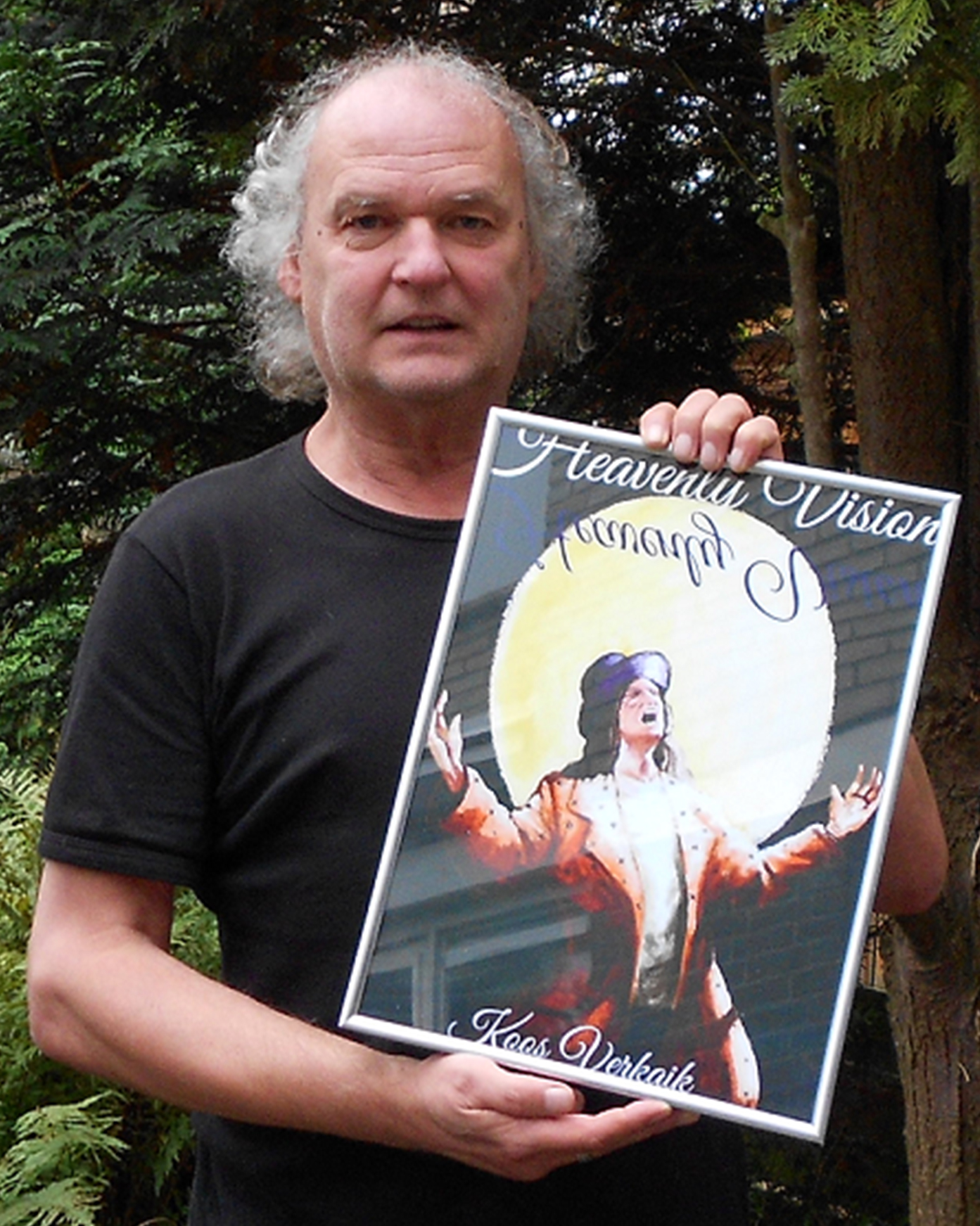
A book collector of limited means comes across a 1745 Atlas of the Cape of Good Hope in a second-hand bookshop in Amsterdam. Once his historian friend examines the manuscript found inside, he becomes very excited and life for Jan Glas is never the same again.
A book collector of limited means comes across a 1745 Atlas of the Cape of Good Hope in a second-hand bookshop in Amsterdam. Once his historian friend examines the manuscript found inside, he becomes very excited and life for Jan Glas is never the same again.
By Sheri A. Wilkinson 5.0 out of 5 stars Fantastic! September 19, 2018
In 1745 an old manuscript is found in an old atlas of Cape of Good hope. Captain Adriaen Kalf tries to figure out its meaning. In current time, a man from Amsterdam Jan Glas learns of a machine that could end the world. He embarks on a journey to England and the USA to learn more about this. He meets a man in the United States from The Center of The Heavenly Vision, who claims that this machine is real and will indeed will kill people. Jan encounters some strange people and events, could this manuscript from the past be connected to this killing machine? Does this machine exist? And is this “prophecy” going to come true? A cast of likable, unlikable and quirky characters, along with a very original and interesting story makes for a fantastic read. I liked the writing style, going back to the past and present, and the characters, all unique in their own way. I recommend Heavenly Vision to those who like adventure , drama and excitement. I also recommend The Nibelung Gold also by Koos Verkaik.
By Sandra K. Stiles 4.0 out of 5 stars Very Interesting September 19, 2018
If you like books that bounce back and forth between the past 1700s, and the present then this is the book for you. It makes it a little confusing, but if you are willing to hang in there it all becomes clear in the end. In the past we have an old manuscript, in the present we have a machine that is said to be able to end the world. What are the connections if any between these two? The author has taken these two events and woven them into a story that will have you reading cover to cover just to find that connections. Once again this author has created a book that grabs you and forces you to read to find the answer to all of those questions you had at the beginning. I applaud him for this ability. I received a copy to facilitate my review. The opinions expressed here are my own.

Reviewed by Steven Felicelli
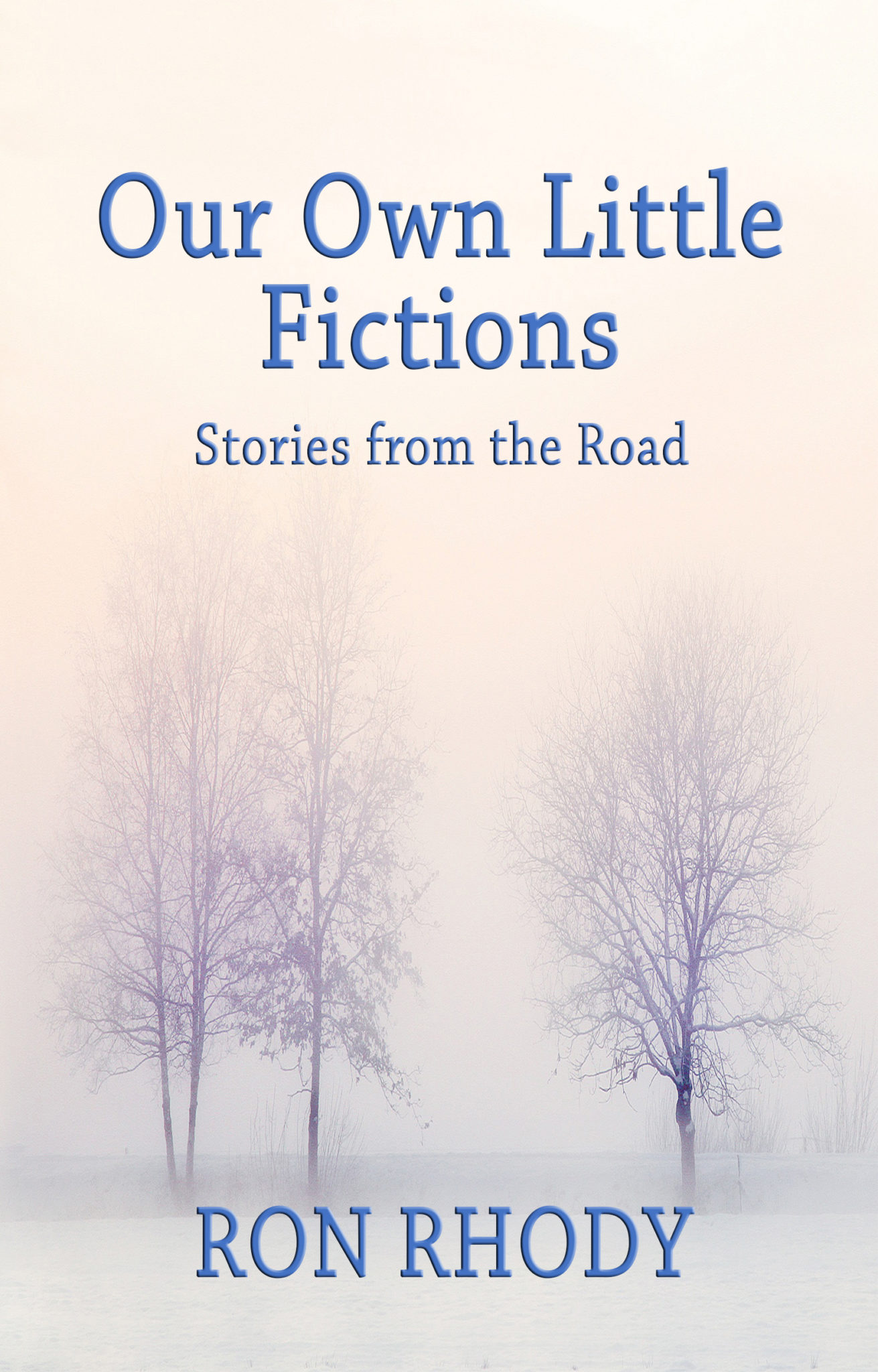
According to Ron Rhody’s wife, he is not eligible for authoring a memoir. He hasn’t won an Oscar or an MVP or a Nobel prize. And yet Rhody has a story he wants, needs, to tell. His story. And so that’s how he will tell it to us: as one of Our Own Little Fictions.
Reminiscent of Sarah Polley’s documentary Stories We Tell, Rhody meanders through his memory and down the real roads he’s traveled all over the U.S., from his beloved Frankfort, Kentucky, to California and back (via Florida and Alabama) and then back out to California. Along this circuitous route through his youth, manhood, and ancestry, we encounter all sorts of colorful characters, historical events, family triumphs, and tragedies, which in large part amount to the man whose story we’re being told.
The place closest to Rhody’s heart is clearly Frankfort, Kentucky. It is there his father, a newspaperman, fought for civil rights and to put down roots for his forward-thinking family. Though a wanderlust would uproot the Rhodys and send them all over the U.S., Kentucky kept calling them back to the heart of the heart of their country. In Our Own Little Fictions, Frankfort is origin and refuge, and it serves as the Ithaca of the author’s Odyssey.These chronicles of Rhody contain all the joy and pain of an American life that spans the Cold War to the present.
We meet his parents, grandparents, wife and children, friends and mentors. From animated anecdotes of a hard-nosed football coach doling out life lessons to the memorial for a dear friend and author of “sixteen erudite books,” we witness a life pass in time-lapse frames of laconic, Hemingwayesque prose.
Hemingway and his suicide haunt the narrative beginning to end. On a road trip from California to Kentucky, Rhody and his son make a scheduled detour to Hemingway’s home in Idaho (where he’d put the shotgun in his mouth).
”It seemed wrong that Hemingway had killed himself. Nature should have gotten him. Or chance.”
Later in the narrative and earlier in time, news of Hemingway’s suicide reaches Rhody, and he reflects on the premature tragedy, as well as his own (missed?) calling. These two time periods intermingle, and Rhody leaves Idaho with “an answer to a question I hadn’t known I’d asked.” Authorship was an alternative path he’d bypassed only to embark upon late in life.
Later in the narrative and earlier in time, news of Hemingway’s suicide reaches Rhody, and he reflects on the premature tragedy, as well as his own (missed?) calling. These two time periods intermingle, and Rhody leaves Idaho with “an answer to a question I hadn’t known I’d asked.” Authorship was an alternative path he’d bypassed only to embark upon late in life.
Late in life, indeed. The long road approaches its end and the loss of loved ones is an inevitability. Each story has the same conclusion, alas, and many of the characters we encounter in this Appalachian saga pass on in heartrending deathbed scenes and austere funerals. The depiction of these tragedies is sentimental, even cliched, but anything less/more would not be true to life. It is the commonality of these cliches that arise in endless variations, like updates of Shakespeare.
No, Ron Rhody is no Prince Hamlet, nor was he meant to be, but his story of “becoming,” with its conduplicatio, terse punch-lines, and homespun wisdom, is one that will always be in need of telling and retelling.
The feature photo above from left, Ron Rhody’s sister, Ann, his mother and sister, Mary Lou.
Be aware of rip currents this Labor Day Weekend. If in doubt, ask a lifeguard.

If you vote for Trump and his MAGA GOP members you may indirectly start World War III.
If Trump and his MAGA GOP take control of our Congress, they will cut off support for Ukraine. They already cut support on the advice of Trump when the Congress was ready to approve the spending bill with support for Ukraine.
What will happen next?
said Larry Jacobs, director of the Center for the Study of Politics and Governance at the University of Minnesota. “This is supposed to be the party of conservative principles, of tradition, of respect for customs and rules that make society governable.
“The idea that the law does not apply to Republicans is something that has now become part of the mainstream of the Republican party. We see it in terms of the approach to elections. We see it in terms of the treatment of immigrants. Some of the actions with regard to abortion may approach that level. The Republican party appears to consider the law and the constitution to be optional and to have lost legitimacy.”
From The Guardian
Republicans’ lawless leaders at odds with midterm law and order message | Republicans | The Guardian

If you vote Republican you are supporting:
– 19 GOP red states have pending laws suppressing voter’s ability to vote. Historically, dictators and Fascists have suppressed votes to stay in power.
– The GOP has come out in support of QAnon, The Oath Keepers and the Proud Boys
– You may lose a loved one, a relative or a friend in a train crash, a bridge collapse or a plane crash as Republicans strip funds from President Biden’s infrastructure bill.
– The Texas abortion ban if left to stand will be passed in several other GOP states. Idaho will pass an anti-abortion law based on the Texas law. 16 states have “trigger” abortion ban laws.
by the US Supreme Court.
https://cnn.it/3RaW1zm
https://nyti.ms/3IcANNo
With the recent Supreme Court banning EPA authority from polluters
https://bit.ly/3IfQ1Bf
on Gun Purchases – will never get passed.
Watch Jimmy Kimmel’s emotional plea to improve gun purchase background checks
https://cnn.it/3AnRweO
– will never go up leaving 18 states still paying $7.25 an hour.
– the last thing America needs are conservative leaders, especially some Republicans who want to keep America from progressing. The last thing America needs is backward-thinking leaders in the 21st Century.
– Republicans have turned to cheating to stay in power or to get back into power…and nothing is getting done by them for the American people.
The enforcement or advocacy of strict obedience to authority at the expense of personal freedom.
and everything America stands for: Truth, Justice and Liberty for all? Look what is happening in Ukraine.
*Of course, not all Republicans are like those described above. Here is a list of those who should stay in office.
House of Representatives – those who voted to impeach the former president
Senate – The Republicans who voted to convict the former president after impeachment:
YOUR VOTE COUNTS. It’s a lie to think otherwise.
Paid for by Jake Stone for American Democracy
VOTE like your freedom depended on it…because it does.

 Books of the NY Times