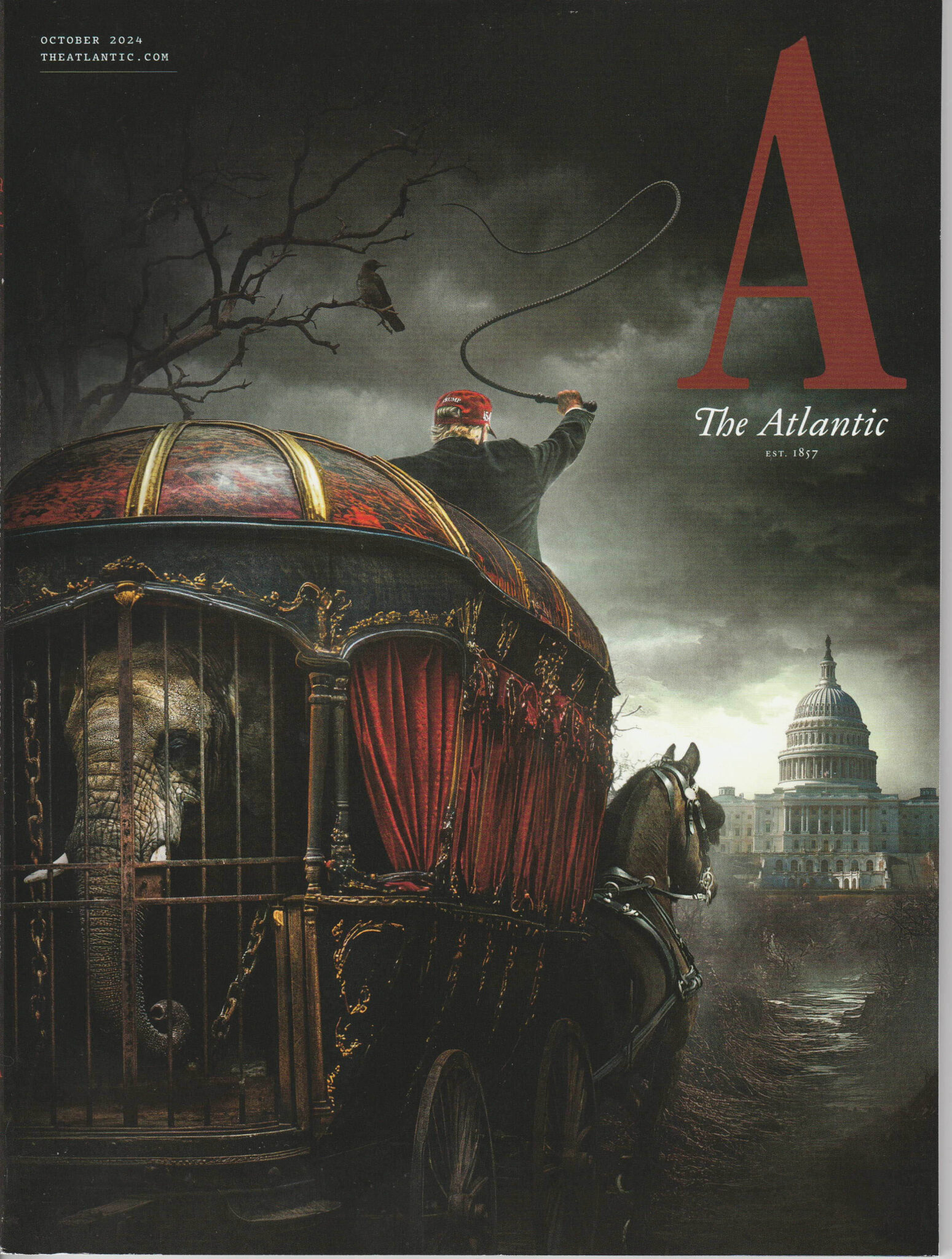
 I’ve never been much of a magazine subscriber. With the endless stream of information online, it’s easy to feel like everything worth reading is already at my fingertips. But the October 2024 cover of The Atlantic stopped me cold. It wasn’t just striking — it felt like a warning.
The illustration, a circus wagon rendered in a style reminiscent of Ray Bradbury’s Something Wicked This Way Comes and the eerie Americana of Stephen King, carried a sense of foreboding that was impossible to ignore. Designed by Justin Metz, the image captured a mood I couldn’t shake: a sense that something dark and familiar had rolled back into town.
And then, as the months unfolded, it became clear that the cover wasn’t simply evocative — it was prophetic.
The 2024 election brought with it a political atmosphere that felt uncomfortably aligned with the imagery on that cover. The sense of spectacle, the creeping dread, the feeling that the country was being pulled into a performance none of us auditioned for — it all echoed the visual language Metz had created.
The cover didn’t predict specific events, of course, but it captured the emotional truth of the moment. It distilled the unease many felt into a single, unforgettable image.
Part of what makes The Atlantic so compelling is that it has always understood the power of context. Founded in 1857 by a group of abolitionists, the magazine has spent more than a century and a half examining American culture, politics, and identity with a long view of history.
That legacy matters. It’s what allows the publication to draw lines between past and present — to show how old patterns resurface in new forms, and how cultural anxieties often echo across generations.
The October 2024 cover wasn’t just a clever piece of design. It was part of a tradition of cultural commentary that stretches back to the magazine’s earliest days.
After seeing that cover — and after watching the months that followed — I realized something: I wanted to support journalism that could capture a moment so precisely, and that could contextualize it with depth and historical awareness.
So I subscribed.
It felt like a small investment in a publication that consistently delivers clarity in a noisy world. The price wasn’t the reason I subscribed, but it certainly made the decision easier to justify.
We live in a time when images move faster than understanding. But every so often, a piece of art cuts through the noise and tells the truth before the headlines do. The October 2024 cover of The Atlantic was one of those moments — a reminder that design, storytelling, and journalism can converge to illuminate the world around us.
And sometimes, that’s worth subscribing to.
The Atlantic magazine was founded in 1857 in Boston as The Atlantic Monthly, a literary and cultural magazine that published leading writers’ commentary on education, the abolition of slavery, and other major political issues of that time. Its founders included Francis H. Underwood and prominent writers Ralph Waldo Emerson, Oliver Wendell Holmes Sr., Henry Wadsworth Longfellow, Harriet Beecher Stowe, and John Greenleaf Whittier, according to Wikipedia.

If you vote for Trump and his MAGA GOP members you may indirectly start World War III.
If Trump and his MAGA GOP take control of our Congress, they will cut off support for Ukraine. They already cut support on the advice of Trump when the Congress was ready to approve the spending bill with support for Ukraine.
What will happen next?
said Larry Jacobs, director of the Center for the Study of Politics and Governance at the University of Minnesota. “This is supposed to be the party of conservative principles, of tradition, of respect for customs and rules that make society governable.
“The idea that the law does not apply to Republicans is something that has now become part of the mainstream of the Republican party. We see it in terms of the approach to elections. We see it in terms of the treatment of immigrants. Some of the actions with regard to abortion may approach that level. The Republican party appears to consider the law and the constitution to be optional and to have lost legitimacy.”
From The Guardian
Republicans’ lawless leaders at odds with midterm law and order message | Republicans | The Guardian
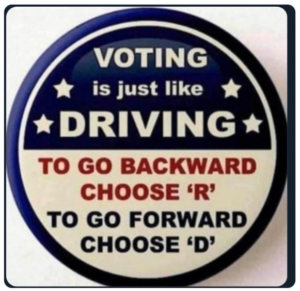
If you vote Republican you are supporting:
– 19 GOP red states have pending laws suppressing voter’s ability to vote. Historically, dictators and Fascists have suppressed votes to stay in power.
– The GOP has come out in support of QAnon, The Oath Keepers and the Proud Boys
– You may lose a loved one, a relative or a friend in a train crash, a bridge collapse or a plane crash as Republicans strip funds from President Biden’s infrastructure bill.
– The Texas abortion ban if left to stand will be passed in several other GOP states. Idaho will pass an anti-abortion law based on the Texas law. 16 states have “trigger” abortion ban laws.
by the US Supreme Court.
https://cnn.it/3RaW1zm
https://nyti.ms/3IcANNo
With the recent Supreme Court banning EPA authority from polluters
https://bit.ly/3IfQ1Bf
on Gun Purchases – will never get passed.
Watch Jimmy Kimmel’s emotional plea to improve gun purchase background checks
https://cnn.it/3AnRweO
– will never go up leaving 18 states still paying $7.25 an hour.
– the last thing America needs are conservative leaders, especially some Republicans who want to keep America from progressing. The last thing America needs is backward-thinking leaders in the 21st Century.
– Republicans have turned to cheating to stay in power or to get back into power…and nothing is getting done by them for the American people.
The enforcement or advocacy of strict obedience to authority at the expense of personal freedom.
and everything America stands for: Truth, Justice and Liberty for all? Look what is happening in Ukraine.
*Of course, not all Republicans are like those described above. Here is a list of those who should stay in office.
House of Representatives – those who voted to impeach the former president
Senate – The Republicans who voted to convict the former president after impeachment:
YOUR VOTE COUNTS. It’s a lie to think otherwise.
Paid for by Jake Stone for American Democracy
VOTE like your freedom depended on it…because it does.

 Books of the NY Times